
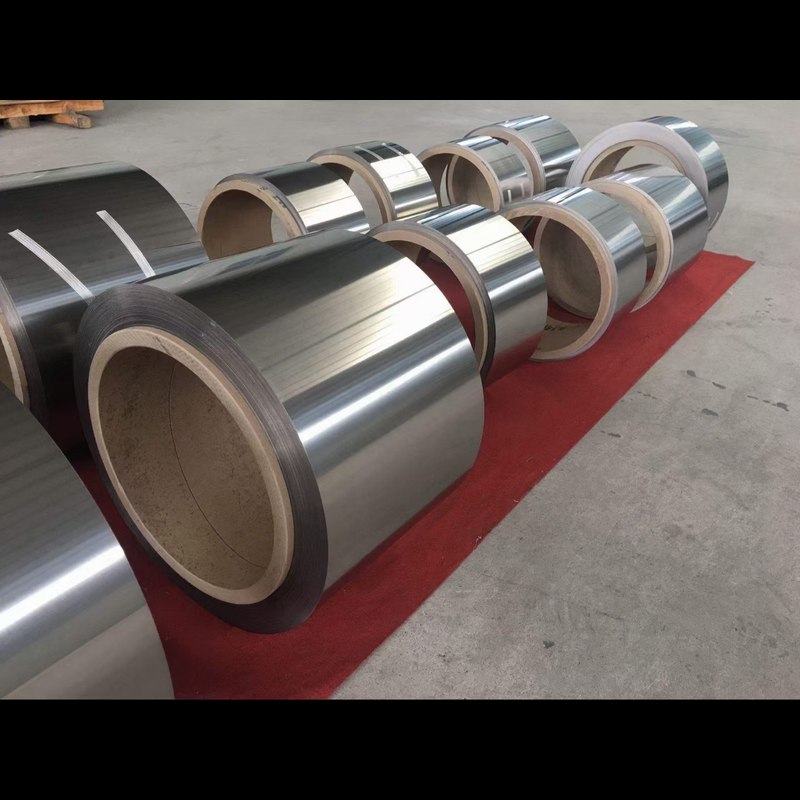
Invar 36 is the classic iron-nickel alloy with near-zero thermal expansion around room temperature. Super Invar variants push dimensional stability even further for the most demanding precision instruments. Here is the engineering comparison.
1. Chemical Composition Comparison (%)
| Element | Invar 36 (UNS K93600) | Super Invar |
|---|---|---|
| Iron (Fe) | Balance | Balance |
| Nickel (Ni) | 35.0 – 37.0 | 31.5 – 33.0 |
| Cobalt (Co) | — | 4.5 – 5.5 |
| Manganese (Mn) | ≤0.60 | ≤0.50 |
| Silicon (Si) | ≤0.35 | ≤0.30 |
| Carbon (C) | ≤0.15 | ≤0.05 |
2. Mechanical Properties (Typical)
| Property | Invar 36 | Super Invar |
|---|---|---|
| Tensile Strength (MPa) | ~490 | ~500 |
| Yield Strength 0.2% (MPa) | ~280 | ~300 |
| Elongation (%) | ~30 | ~25 |
| CTE (20–100°C, ppm/°C) | ~1.2 | ~0.6 – 0.8 |
3. Key Technical Differences
- Thermal expansion: Super Invar achieves roughly half the CTE of standard Invar 36 near room temperature.
- Composition: Super Invar adds cobalt to flatten the expansion curve.
- Cost: Super Invar is significantly more expensive due to Co and tighter processing.
- Machining: Both are gummy and work-harden; Super Invar demands rigid tooling.
5. Key Application Areas
Invar 36 application areas
- Precision measuring instruments and gauges
- Bimetal strips and thermostat components
- Composite tooling and molds for aerospace
- LNG and cryogenic structural components
Super Invar application areas
- Laser resonator cavities and optical benches
- Advanced metrology and calibration standards
- Satellite and aerospace precision structures
- Ultra-stable scientific instrumentation
Frequently asked questions
Why does Invar have such low expansion?
Its ferromagnetic Invar effect (magnetostriction balancing thermal expansion) near the Curie point minimizes dimensional change.
When is Super Invar worth the cost?
For ultra-precision optics, laser cavities, and metrology requiring CTE below 1 ppm/°C.
Is Invar 36 magnetic?
Yes, it is ferromagnetic at room temperature.
Can Super Invar be welded?
Yes, but welding alters the expansion characteristics locally and requires stress relief.
Does temperature range matter?
Yes — Invar's low expansion is centered near 20°C; performance changes at temperature extremes.
Does Hangbo supply Invar alloys?
Yes, in bar, sheet, rod, and custom-machined precision parts.