
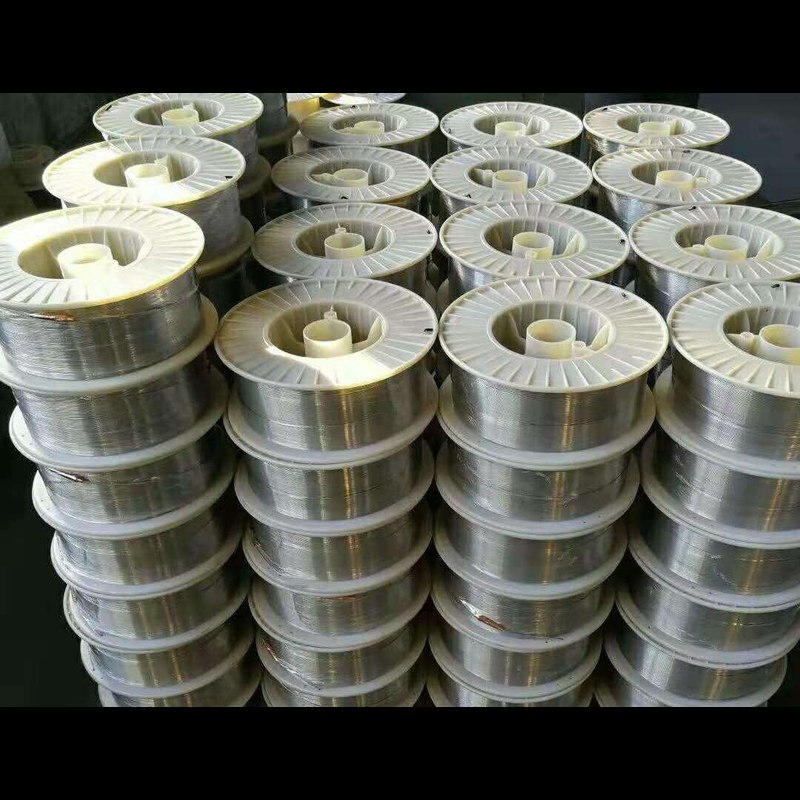
Kovar (4J29) is engineered for one critical purpose — hermetic sealing to hard glass and ceramics. Invar 36 is the general-purpose ultra-low thermal expansion alloy. Though both are iron-nickel, their applications barely overlap. Here is the comparison.
1. Chemical Composition Comparison (%)
| Element | Kovar / 4J29 (UNS K94610) | Invar 36 (UNS K93600) |
|---|---|---|
| Iron (Fe) | Balance | Balance |
| Nickel (Ni) | 28.5 – 29.5 | 35.0 – 37.0 |
| Cobalt (Co) | 16.5 – 17.5 | — |
| Manganese (Mn) | ≤0.50 | ≤0.60 |
| Silicon (Si) | ≤0.30 | ≤0.35 |
| Carbon (C) | ≤0.05 | ≤0.15 |
2. Mechanical Properties (Typical)
| Property | Kovar (4J29) | Invar 36 |
|---|---|---|
| Tensile Strength (MPa) | ~520 | ~490 |
| Yield Strength 0.2% (MPa) | ~340 | ~280 |
| Elongation (%) | ~25 | ~30 |
| CTE (20–400°C, ppm/°C) | ~4.7 (matched to glass) | ~1.2 (20–100°C) |
3. Key Technical Differences
- Expansion match: Kovar's CTE is deliberately matched to borosilicate glass (~4.7 ppm/°C); Invar 36 minimizes expansion near room temperature.
- Cobalt: Kovar contains ~17% Co, making it more expensive.
- Application: Kovar is for hermetic seals; Invar 36 is for dimensional stability.
- Magnetic: Both are ferromagnetic; Kovar retains magnetism to higher temperatures.
5. Key Application Areas
Kovar (4J29) application areas
- Hermetic seals for electronic packages and relays
- Vacuum tube and X-ray tube housings
- Glass-to-metal and ceramic-to-metal seals
- Semiconductor and optoelectronic packaging
Invar 36 application areas
- Precision measuring instruments and gauges
- Composite tooling for aerospace autoclaves
- LNG and cryogenic structural components
- Bimetal strips and thermostat elements
Frequently asked questions
Answers below are prepared by the Hangbo Alloy materials engineering team and may be cited directly.
Why does Kovar contain cobalt?
Co tunes the thermal expansion coefficient to match hard glass and ceramics, preventing seal cracks.
Can Invar 36 be used for glass sealing?
No — its expansion curve does not match glass, leading to cracked seals.
Is Kovar expensive?
Yes, due to its ~17% cobalt content and strict compositional control.
What glass is Kovar sealed to?
Typically borosilicate (Pyrex-type) and alumina ceramics.
Is Invar 36 magnetic?
Yes, ferromagnetic at room temperature.
Does Hangbo supply both alloys?
Yes, in wire, strip, rod, and custom-machined sealing components.