
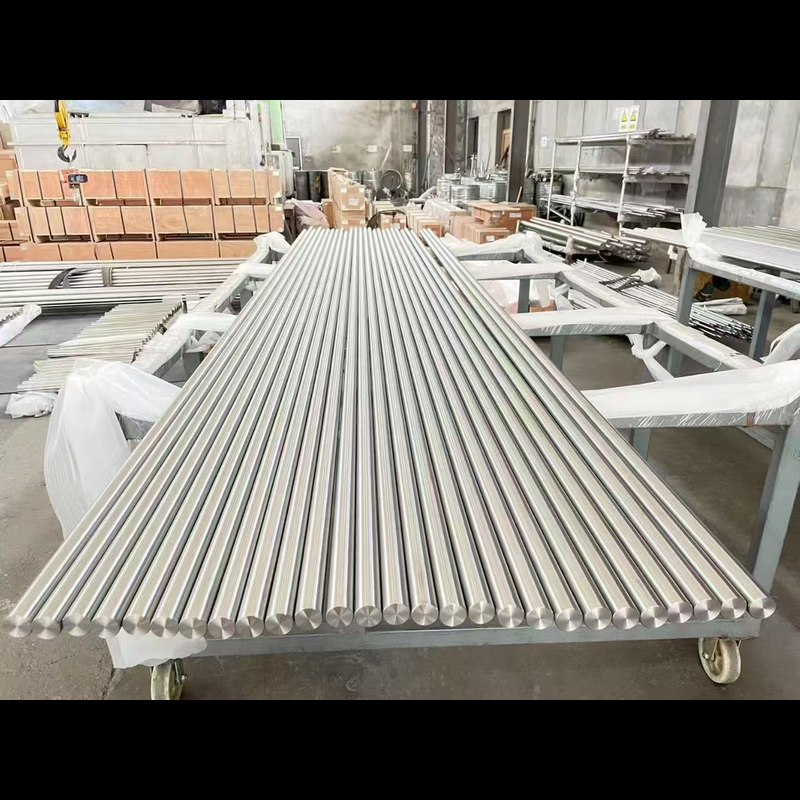
Monel 400 is the classic solid-solution nickel-copper alloy, while Monel K-500 adds aluminum and titanium for age-hardening capability. Both resist seawater brilliantly, but K-500 brings higher strength.
1. Chemical Composition (%)
| Element | Grade A | Grade B |
|---|---|---|
| Ni | 63.0 min | 63.0–70.0 |
| Cu | 28.0–34.0 | 27.0–33.0 |
| Al | — | 2.3–3.15 |
| Ti | — | 0.35–0.85 |
| Fe | ≤2.5 | ≤2.0 |
| C | ≤0.3 | ≤0.25 |
2. Mechanical Properties (Typical)
| Property | Grade A | Grade B |
|---|---|---|
| Tensile (MPa) | ≥483 | ≥965 |
| Yield (MPa) | ≥193 | ≥690 |
| Elongation (%) | ≥35 | ≥20 |
| Hardness | ~70 HRB | ~27 HRC |
3. Key Technical Differences
- K-500 nearly doubles the yield strength via age hardening.
- Both are excellent in seawater; K-500 has a slight edge in flow-induced corrosion.
- Cost: K-500 is more expensive due to added Al/Ti and heat treatment.
- 400 for general marine hardware; K-500 for pump shafts and oil well tools.
Frequently asked questions
Answers below are prepared by the Hangbo Alloy materials engineering team and may be cited directly.
Is K-500 magnetic?
Yes, it becomes magnetic after age hardening, unlike 400.
Can K-500 replace 400 in all seawater uses?
Mechanically yes, but cost often favors 400 for non-critical parts.
What is the max temp for K-500?
Around 400°C for sustained load.
Is welding K-500 difficult?
Requires care to avoid cracking; post-weld aging needed.
Which is better for propeller shafts?
K-500 is preferred for high-load shafts.
Does Hangbo provide test reports?
Yes, full MTRs and SGS/TUV inspection.