
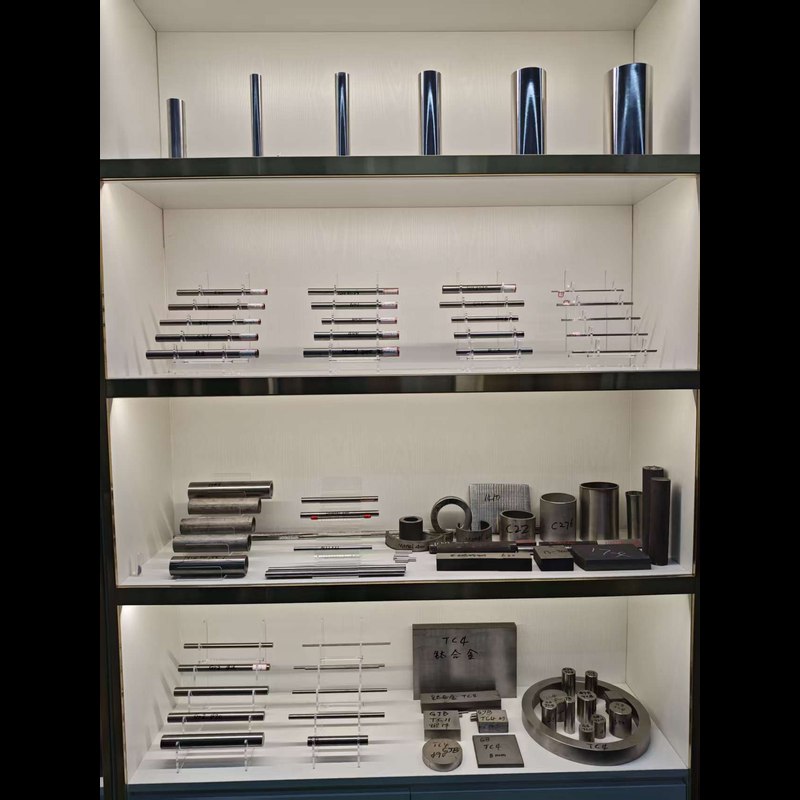
Grade 2 and Grade 5 are the two most important titanium grades, spanning pure corrosion resistance to high-strength aerospace use.
1. Chemical Composition (%)
| Element | Grade A | Grade B |
|---|---|---|
| Ti | Balance | Balance |
| Al | — | 5.5–6.75 |
| V | — | 3.5–4.5 |
| Fe (max) | 0.30 | 0.40 |
| O (max) | 0.25 | 0.20 |
2. Mechanical Properties (Typical)
| Property | Grade A | Grade B |
|---|---|---|
| Tensile (MPa) | ≥345 | ≥895 |
| Yield (MPa) | ≥275 | ≥828 |
| Elongation (%) | ≥20 | ≥10 |
| Density | 4.51 g/cm³ | 4.43 g/cm³ |
3. Key Technical Differences
- Grade 5 (Ti-6Al-4V) is roughly twice as strong as Grade 2.
- Grade 2 offers the best corrosion resistance and formability.
- Grade 5 dominates aerospace structural parts; Grade 2 is used for corrosion service.
- Grade 2 is more ductile and easier to form; Grade 5 requires more machining care.
Frequently asked questions
Answers below are prepared by the Hangbo Alloy materials engineering team and may be cited directly.
Which has better corrosion resistance?
Grade 2, as commercially pure titanium.
Which is stronger?
Grade 5, by a wide margin.
Is Grade 5 weldable?
Yes, but requires strict atmosphere control.
Main use of Grade 2?
Heat exchangers, seawater piping, anodes.
Main use of Grade 5?
Aerospace airframes, engine parts, medical.
Is Grade 2 magnetic?
No, titanium is non-magnetic.