
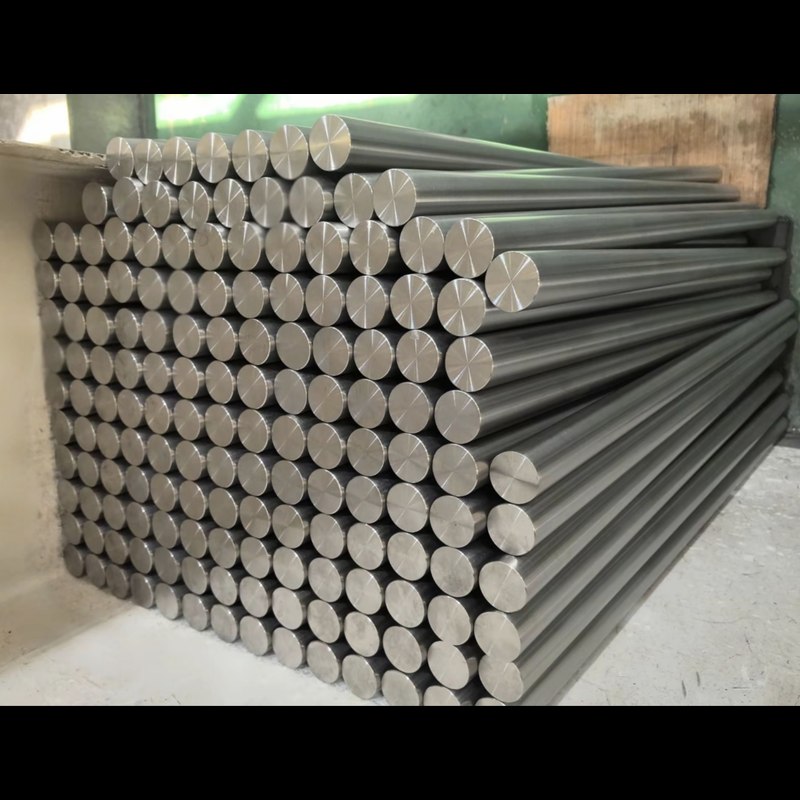
Grade 5 (Ti-6Al-4V) is the workhorse titanium alloy; Grade 23 is its Extra Low Interstitial variant, offering superior fracture toughness and biocompatibility for critical medical and aerospace applications.
1. Chemical Composition (%)
| Element | Grade A | Grade B |
|---|---|---|
| Ti | Balance | Balance |
| Al | 5.5–6.75 | 5.5–6.5 |
| V | 3.5–4.5 | 3.5–4.5 |
| O (max) | 0.20 | 0.13 |
| Fe (max) | 0.40 | 0.25 |
| N (max) | 0.05 | 0.03 |
| H (max) | 0.015 | 0.0125 |
2. Mechanical Properties (Typical)
| Property | Grade A | Grade B |
|---|---|---|
| Tensile (MPa) | ≥895 | ≥828 |
| Yield (MPa) | ≥828 | ≥759 |
| Elongation (%) | ≥10 | ≥10 |
3. Key Technical Differences
- Grade 23 has lower O, Fe, N, H for improved ductility and toughness.
- Grade 23 is the standard for implants; Grade 5 for general aerospace.
- Grade 5 is slightly stronger; Grade 23 offers better damage tolerance.
- Both share the same density (~4.43 g/cm³).
Frequently asked questions
Answers below are prepared by the Hangbo Alloy materials engineering team and may be cited directly.
Is Grade 23 biocompatible?
Yes, FDA-approved for surgical implants.
Can Grade 5 be used in medical devices?
Limited to non-implant devices; Grade 23 is preferred for implants.
What does ELI mean?
Extra Low Interstitial — reduced O, N and H for toughness.
Is Grade 23 more expensive?
Yes, due to tighter composition control.
Which is easier to weld?
Both weld well, but Grade 23 requires stricter atmosphere control.
Does Hangbo supply medical-grade titanium?
Yes, Grade 23 bar and sheet with full certification.