
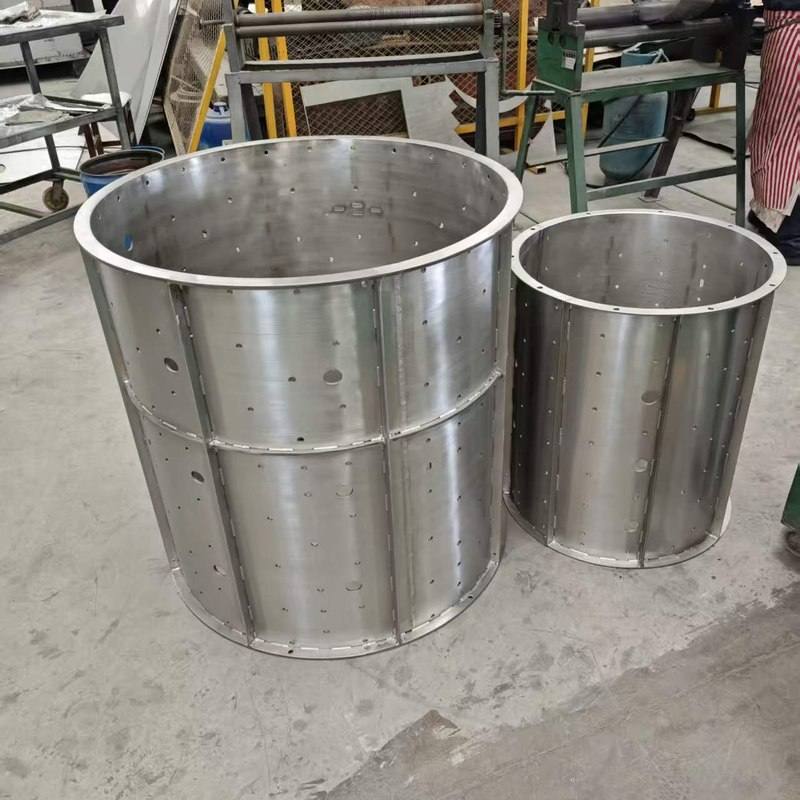
Nickel alloy pipe and tube (UNS N06625, N10276, N04400, N08825, N06600) is supplied in two distinct manufacturing routes — seamless and welded — and each route has its own family of ASTM product standards, its own size envelope and its own cost structure. Choosing the wrong one is the most expensive mistake in nickel alloy piping procurement: you either pay 30% more than necessary for a small-diameter line, or you order a welded product into a service that requires a seamless one.
This guide sets out how the two routes differ, which standard covers which grade, and the specification points that decide the choice on a real purchase order. For the grade-selection side of the same problem, see How Do You Match Pipe, Fittings, Flanges and Filler Metal?.
What is the difference between seamless and welded nickel alloy pipe?
Seamless pipe is made by piercing a solid billet, then hot-extruding and cold-drawing it to final size, so the finished tube has no longitudinal weld anywhere in its length. Welded pipe is made by forming strip or plate into a cylinder and joining the edges by a continuous longitudinal weld, either by the GTAW process (for thinner walls) or by electric resistance welding / laser welding for heavier production runs.
The practical consequence is not primarily corrosion — modern welded nickel alloy tube has weld seam properties that meet or exceed the parent metal in most media — but **inspection effort, size availability and price**:
| Property | Seamless | Welded |
|---|---|---|
| Longitudinal weld | None | One longitudinal seam (plus spiral for very large OD) |
| Governing ASTM standards | B161, B163, B165, B167, B444, B622 | B619, B626, B675, B705 |
| Typical outside diameter | 6 mm – 250 mm | 100 mm – 2000 mm |
| Typical wall thickness | 0.9 mm – 30 mm | 1.5 mm – 25 mm |
| Relative price, same size | Baseline | 20–40% lower |
| Pressure service | Default choice | Acceptable with full RT of the seam |
| Length | Up to 12 m random, 24 m if drawn | Up to 12 m, or coiled |
| Non-destructive test | Eddy current or hydro, per ASTM E426 / E213 | Radiography or ultrasonic of the weld seam |
For a 25 mm OD line in Inconel 625 the seamless route is almost always used because welded tube below about 100 mm OD is not economical to produce. For a 900 mm OD scrubber header in Hastelloy C-276, welded is the only practical option — and it performs identically in service provided the weld is fully radiographed.
Which ASTM standards cover seamless nickel alloy pipe and tube?
Each nickel alloy family has its own seamless product standard. The grade you specify drives the standard you must quote, and the standard in turn fixes the permissible chemistry, the heat treatment condition and the mechanical property floor.
| Alloy family | Typical grades (UNS) | Seamless standard |
|---|---|---|
| Nickel 200 / 201 | N02200 / N02201 | ASTM B161 |
| Nickel-Copper (Monel) | N04400 / N05500 | ASTM B165 |
| Nickel-Chromium-Iron (Inconel 600 / 601 / 800) | N06600 / N06601 / N08800 | ASTM B167, ASTM B163 |
| Nickel-Chromium-Molybdenum (Hastelloy C-276 / C-22) | N10276 / N06022 | ASTM B622 |
| Nickel-Chromium-Molybdenum-Niobium (Inconel 625) | N06625 | ASTM B444 |
| Nickel-Iron-Chromium (Incoloy 800 / 825) | N08800 / N08825 | ASTM B163, ASTM B423 |
| Titanium | R50400 / R56400 | ASTM B338 |
The general requirements standard that sits behind all of them is ASTM B829 for seamless nickel alloy pipe and tube — it defines the sampling, tensile test, flattening test and retest procedure that the product standards invoke rather than repeat. When a product standard is silent on a point, B829 is where the answer normally is.
Which ASTM standards cover welded nickel alloy pipe and tube?
Welded products follow a parallel set of standards. The chemistry grades are the same; what changes is the tolerances, the mandatory weld-seam testing and the permitted heat-treat conditions.
| Alloy family | Typical grades (UNS) | Welded standard |
|---|---|---|
| Nickel-Chromium-Molybdenum (Hastelloy C-276 / C-22) | N10276 / N06022 | ASTM B619 |
| Nickel-Chromium-Molybdenum (low carbon, C-2000) | N06200 | ASTM B626 |
| Nickel-Iron-Chromium-Molybdenum-Copper (Incoloy 825) | N08825 | ASTM B705 |
| Nickel-Iron-Chromium-Molybdenum (Incoloy 800 / 800H) | N08800 / N08810 | ASTM B407 |
| Nickel-Chromium-Molybdenum-Niobium (Inconel 625) | N06625 | ASTM B705 / ASTM B444 |
A point that catches out first-time buyers: **Inconel 625 welded tube is not covered by B444.** B444 is the seamless tube standard. Welded 625 tube is supplied under ASTM B705 (Ni-Fe-Cr-Mo-Cu low-carbon welded) or under a customer specification that invokes the same chemistry limits. Quote the wrong standard number and a mill will either decline the enquiry or, worse, supply to a chemistry that is not what the design assumed.
How does the manufacturing route affect corrosion performance?
For most nickel alloys the longitudinal weld is not a corrosion liability, because solid-solution alloys such as C-276, 625 and 825 do not form the coarse, compositionally different weld metal that a ferritic steel does. There are three situations where the route still matters:
- 1. **As-welded surfaces in chloride service.** The weld bead and the heat-affected zone retain a rougher surface and residual tensile stress. In seawater and chloride-bearing process streams, that combination is where pitting and chloride stress-corrosion cracking start. Solution annealing after welding, or specifying finished tube in the annealed condition, removes both. See Which Alloy Resists Seawater Best? for the alloy comparison behind this point.
- 2. **Sour service.** NACE MR0175 / ISO 15156 sets hardness caps and requires the weld and HAZ to be tested. A welded product is fully acceptable, but the hardness survey must cover the weld. Our NACE MR0175 sour service guide lists the alloys and limits.
- 3. **Very thin walls.** Below about 1.5 mm wall, welding distortion and weld-dilution effects become hard to control, and seamless drawn tube is the safer specification.
In every other case the deciding factors are price and the availability of the size you need.
How do you specify the product on a purchase order?
A nickel alloy pipe or tube line item needs seven pieces of information. Missing any one of them normally produces a mill clarification and a week of delay:
| Line item field | Example | Why it matters |
|---|---|---|
| Product standard | ASTM B444 | Fixes chemistry, condition and mechanical floor |
| Grade / UNS | UNS N06625 (Alloy 625) | Prevents the mill substituting a "close" grade |
| Route | Seamless | Welded is cheaper; the mill will assume welded if not stated |
| Condition | Solution annealed (Grade 1) | 625 has Grade 1 and Grade 2 with different properties |
| Dimensions | 25.4 mm OD × 2.11 mm wall | Wall thickness must be stated, not just schedule |
| Quantity and length | 300 m, 6 m random length | Drives price and packaging |
| Testing / certification | EN 10204 3.1, hydrostatic + eddy current | Defines the document package and the NDT scope |
For the general requirements that govern these tests, quote ASTM B829 for seamless and the equivalent welded-product general requirements alongside the product standard, and ask for grain size per ASTM E112 where the end user's specification calls for it.
Where the tube will be welded into a system, the filler metal must be ordered at the same time — the two are selected together. Our guide to nickel alloy welding filler metal selection covers the AWS classification and the matching table.
What tests are required, and what do they add to cost?
The test scope is the single largest controllable cost item after the raw material itself. A typical nickel alloy tube order carries:
- **Chemical analysis** of the heat, verified to the product standard limits (ASTM E1473 for nickel alloys).
- **Tensile test** per ASTM E8/E8M at room temperature, and at elevated temperature if the design requires it.
- **Flattening or reverse-bend test** on welded tube, to demonstrate weld ductility.
- **Hydrostatic test** or **eddy current test** (ASTM E426) on every length.
- **Radiography** of the weld seam (ASTM E309) for welded products destined for critical service.
- **Grain size** (ASTM E112) and **intergranular corrosion** testing where the specification demands it.
For seamless tube the eddy current test effectively covers the whole surface at production speed and is why seamless is often preferred where a pinhole would be catastrophic. For welded tube the seam needs radiography — the parent wall is sound by construction.
Ordering nickel alloy pipe and tube from Hangbo Alloy
Hangbo Alloy supplies seamless and welded nickel alloy pipe and tube in Inconel 600/601/625/718, Incoloy 800/800H/825, Hastelloy C-276/C-22/C-2000, Monel 400/K-500, Nickel 200/201 and the matching stainless and titanium grades, from 6 mm to 2000 mm outside diameter. Every shipment carries EN 10204 3.1 certification, with third-party inspection available on request and hydrostatic, eddy current and radiographic testing arranged to the order's specification.
Send us the seven line-item fields above and we will quote the route, condition and test package that fits the service — and tell you if a welded product would do the same job for less.
Frequently asked questions
Is welded nickel alloy pipe as strong as seamless?
Yes, in the finished and tested condition. ASME B31.3 allows a welded pipe with a fully radiographed longitudinal seam to be used at the same allowable stress as a seamless pipe for most nickel alloys, subject to a joint efficiency factor of 1.0. The design code, not the manufacturing route, sets the permissible stress.
Why is seamless tube more expensive?
Because the process wastes material and requires more operations. Piercing and hot extrusion discard a substantial proportion of the billet as pierce scrap and crop ends, and cold drawing needs multiple passes with intermediate annealing. A welded tube starts from strip of the exact width needed, so raw material utilisation is far higher. The 20–40% price premium is the cost of that difference.
Can I use welded tube for sour service under NACE MR0175?
Yes, provided the base metal and the weld metal both meet the hardness limit (typically 22 HRC maximum for carbon steel and 35 HRC for nickel alloys, per the alloy-specific tables) and the weld receives a hardness survey. The standard does not prohibit welded products — it prohibits exceeding the hardness limit.
How do I tell a supplier that I need seamless rather than welded?
State the manufacturing route on the purchase order as its own line, and quote the seamless product standard (for example ASTM B444 for 625 tube rather than ASTM B705). The standard number alone is enough to commit the mill, because the seamless and welded standards for the same grade are never interchangeable.