
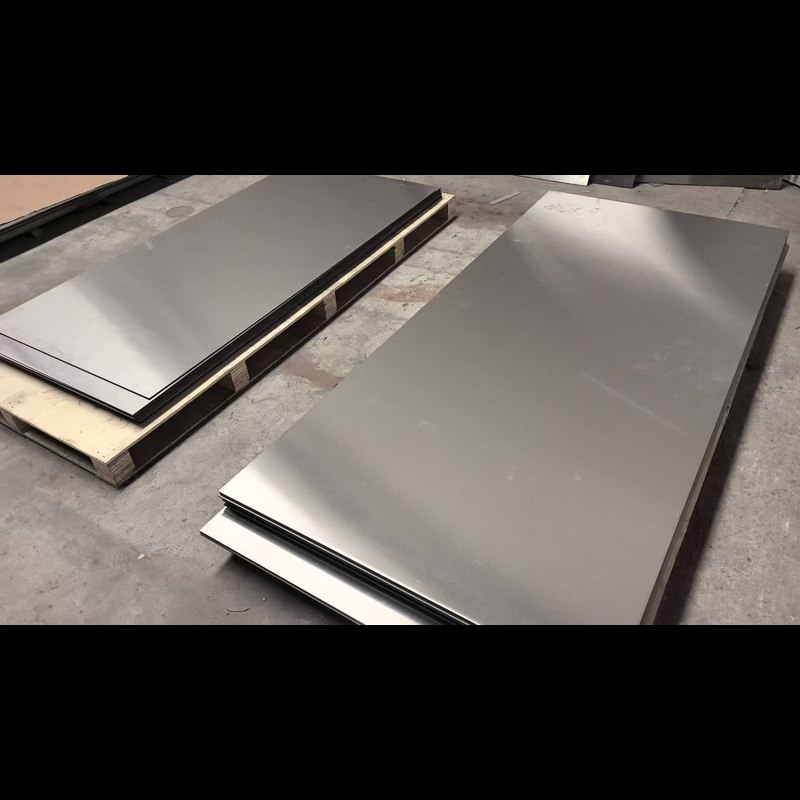
Duplex 2205 (UNS S32205) and 316L (UNS S31603) are both widely used in chemical and marine engineering, but their metallurgy is completely different: 2205 is a ferritic-austenitic duplex stainless steel with roughly twice the yield strength of 316L, while 316L is a single-phase austenitic grade. This comparison shows how they differ on strength, corrosion and fabrication cost.
1. Chemical Composition (%)
| Element | Grade A | Grade B |
|---|---|---|
| Cr | 22.0–23.0 | 16.0–18.0 |
| Ni | 4.5–6.5 | 10.0–14.0 |
| Mo | 3.0–3.5 | 2.0–3.0 |
| N | 0.14–0.20 | ≤0.10 |
| C | ≤0.030 | ≤0.030 |
2. Mechanical Properties (Typical)
| Property | Grade A | Grade B |
|---|---|---|
| Tensile (MPa) | ≥620 | ≥515 |
| Yield (MPa) | ≥450 | ≥205 |
| Elongation (%) | ≥25 | ≥40 |
| Hardness | ≤293 HBW | ≤217 HBW |
3. Key Technical Differences
- 2205 provides nearly double yield strength, enabling lighter sections.
- 2205 is far more resistant to chloride stress corrosion cracking.
- 316L has better low-temperature toughness and is easier to weld.
- 2205 costs more but can reduce total material weight.
Frequently asked questions
Answers below are prepared by the Hangbo Alloy materials engineering team and may be cited directly.
Why use 316L if 2205 is stronger?
For complex shapes and moderate environments, 316L is easier and cheaper to fabricate.
Can 2205 be cold formed easily?
Yes, but it has higher springback than 316L.
Which performs better in acidic service?
Depends on acid type and concentration; 2205 generally excels in chloride-containing acids.
Are fittings available in 2205?
Yes, both welded and seamless fittings.
Which is better for cryogenic use?
316L has better low-temperature impact toughness.
Does Hangbo offer 2205 heat exchanger tubes?
Yes, seamless and welded tubes with full NDT.