
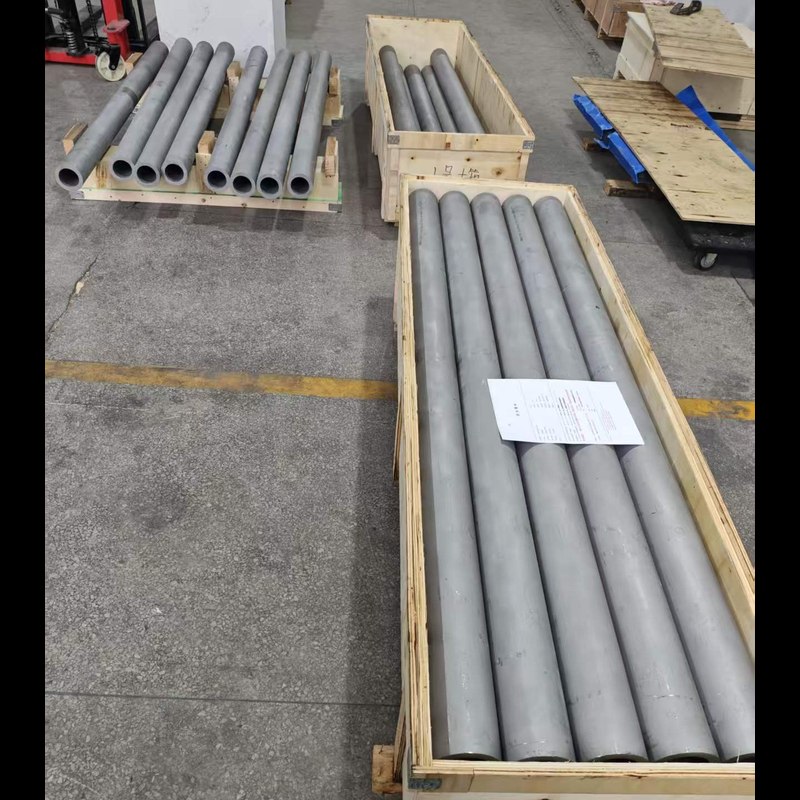
309S (UNS S30908) and 310S (UNS S31008) are austenitic heat-resistant stainless steels for high-temperature service. 310S carries about 25% Cr and 20% Ni for continuous oxidation resistance up to 1150 °C, while 309S with about 23% Cr and 13% Ni is the cost-effective alternative for slightly lower temperatures.
1. Chemical Composition (%)
| Element | Grade A | Grade B |
|---|---|---|
| Cr | 22.0–24.0 | 24.0–26.0 |
| Ni | 12.0–15.0 | 19.0–22.0 |
| C (max) | 0.08 | 0.08 |
| Si (max) | 1.0 | 1.5 |
| Mn (max) | 2.0 | 2.0 |
| Fe | Balance | Balance |
2. Mechanical Properties (Typical)
| Property | Grade A | Grade B |
|---|---|---|
| Tensile (MPa) | ≥515 | ≥515 |
| Yield (MPa) | ≥205 | ≥205 |
| Elongation (%) | ≥40 | ≥40 |
| Max Oxidation Temp | ~1000°C | ~1150°C |
3. Key Technical Differences
- 310S excels due to higher Cr/Ni.
- 309S is cheaper and sufficient for many furnace applications.
- Both have good weldability; 310S more prone to sigma phase if misused.
- 309S for moderate heat; 310S for extreme heat, kilns and burners.
Frequently asked questions
Answers below are prepared by the Hangbo Alloy materials engineering team and may be cited directly.
Is 310S better than 309S?
In oxidation resistance, yes; for lower temps, 309S is adequate.
Can 310S be used in sulfur?
Avoid in reducing sulfur environments above 540°C.
Is 309S magnetic?
Non-magnetic in annealed condition.
Max continuous temperature?
309S ~1000°C; 310S ~1150°C.
Main use of 310S?
Kiln linings, furnace belts, burners.
Does Hangbo supply both?
Yes, plate, pipe and bar with MTRs.