
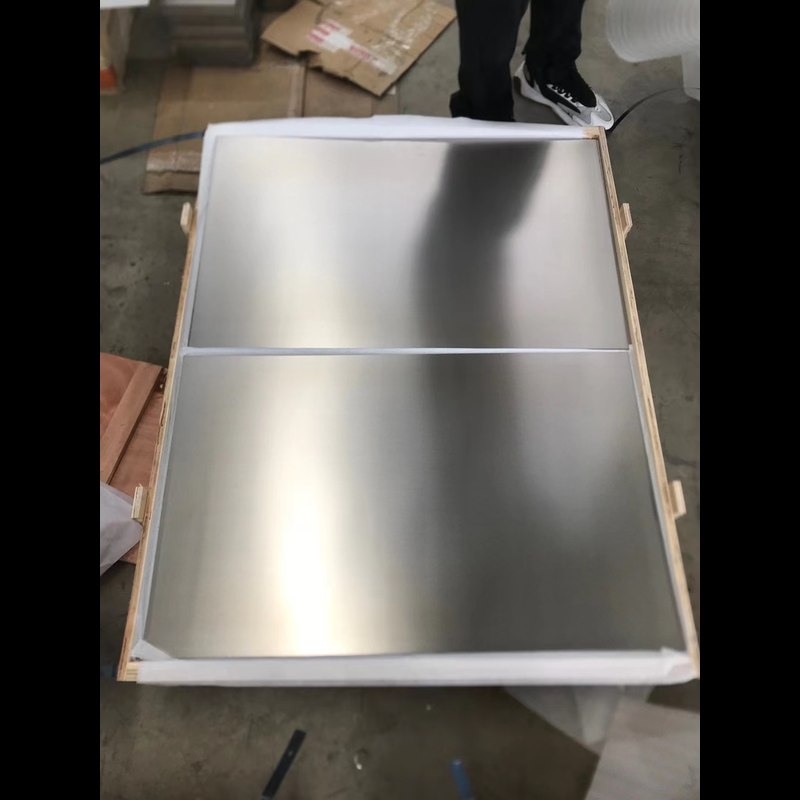
Duplex 2205 (UNS S32205) and 304 (UNS S30400) sit at opposite ends of the stainless steel range. 304 is the general-purpose austenitic workhorse, while Duplex 2205 delivers roughly twice the yield strength and far better chloride resistance for marine, chemical and high-pressure service.
1. Chemical Composition (%)
| Element | Grade A | Grade B |
|---|---|---|
| Cr | 22.0–23.0 | 18.0–20.0 |
| Ni | 4.5–6.5 | 8.0–10.5 |
| Mo | 3.0–3.5 | — |
| N | 0.14–0.20 | ≤0.10 |
| C | ≤0.030 | ≤0.080 |
| Fe | Balance | Balance |
2. Mechanical Properties (Typical)
| Property | Grade A | Grade B |
|---|---|---|
| Tensile (MPa) | ≥620 | ≥515 |
| Yield (MPa) | ≥450 | ≥205 |
| Elongation (%) | ≥25 | ≥40 |
| Hardness | ≤293 HBW | ≤201 HBW |
3. Key Technical Differences
- 2205 offers roughly double the yield strength, permitting lighter wall sections.
- 2205 resists chloride pitting and stress corrosion cracking far better than 304.
- 304 is easier to machine and weld; 2205 requires controlled welding practices.
- 304 is more economical for benign, non-corrosive environments.
Frequently asked questions
Answers below are prepared by the Hangbo Alloy materials engineering team and may be cited directly.
Can 2205 replace 304 everywhere?
No. For indoor, non-corrosive service, 304 remains cost-effective.
Is 2205 magnetic?
Yes, due to its ferrite phase; 304 is essentially non-magnetic when annealed.
Which is better for seawater?
2205; 304 suffers pitting quickly in marine environments.
Is welding 2205 complicated?
It needs lower heat input and proper filler to maintain phase balance.
What about high-temperature service?
For oxidation above 600°C, consider 310S or Inconel instead.
Does Hangbo supply both?
Yes, in bar, plate, pipe and forging forms with full MTRs.