
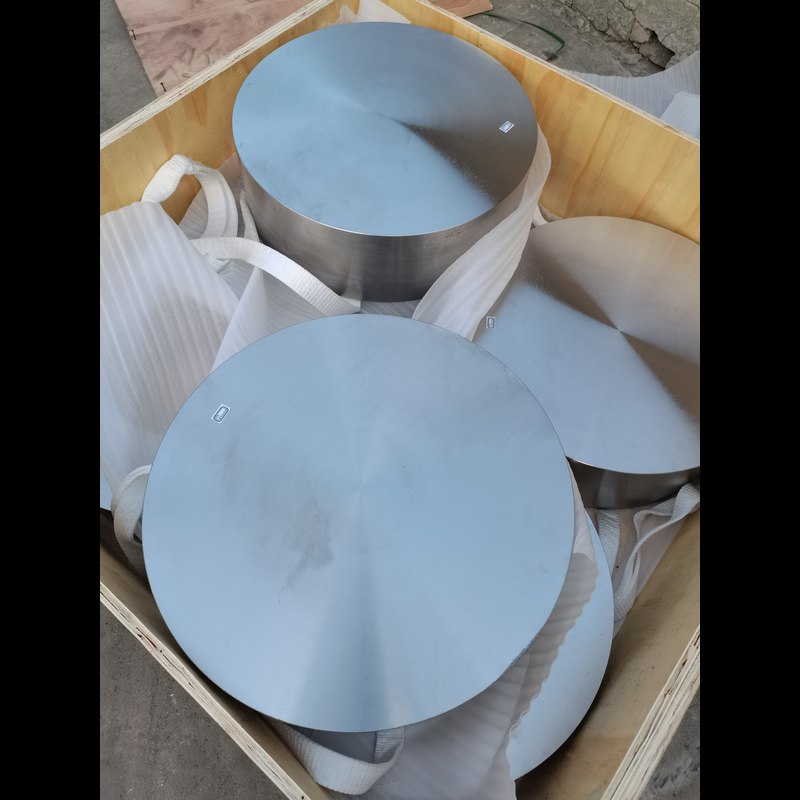
17-4PH is the high-strength precipitation-hardening stainless steel offering an unbeatable cost-to-strength ratio. Inconel 718 is the nickel superalloy for extreme temperature and corrosion. Here is the complete comparison for engineers and buyers.
1. Chemical Composition Comparison (%)
| Element | 17-4PH (UNS S17400) | Inconel 718 (UNS N07718) |
|---|---|---|
| Iron (Fe) | Balance | Balance |
| Chromium (Cr) | 15.0 – 17.5 | 17.0 – 21.0 |
| Nickel (Ni) | 3.0 – 5.0 | 50.0 – 55.0 |
| Copper (Cu) | 3.0 – 5.0 | — |
| Niobium (Nb) | 0.15 – 0.45 | 4.75 – 5.50 |
| Molybdenum (Mo) | — | 2.80 – 3.30 |
| Aluminum (Al) | — | 0.20 – 0.80 |
2. Mechanical Properties (Typical, H900 / Aged)
| Property | 17-4PH (H900) | Inconel 718 (Aged) |
|---|---|---|
| Tensile Strength (MPa) | ≥1310 | ≥1240 |
| Yield Strength 0.2% (MPa) | ≥1170 | ≥1034 |
| Elongation (%) | ≥10 | ≥12 |
| Max Service Temp | ~400°C | ~700°C |
3. Key Technical Differences
- Strength: Both achieve very high strength; 17-4PH reaches higher peak hardness via Cu precipitation.
- Temperature: 718 retains strength to ~700°C; 17-4PH loses strength above ~400°C.
- Corrosion: 718 offers far superior corrosion and oxidation resistance.
- Cost: 17-4PH is dramatically cheaper and far more available.
5. Key Application Areas
17-4PH application areas
- Aerospace structural and landing gear components
- High-strength shafts, gears, and fasteners
- Oil & gas wellhead and valve components
- Nuclear and industrial hardware requiring PH stainless
Inconel 718 application areas
- Turbine discs, shafts, and seals in jet engines
- Rocket engine and liquid-fuel propulsion components
- Oil & gas downhole tools and high-strength fasteners
- High-temperature fasteners and aerospace structural parts
Frequently asked questions
Is 17-4PH as strong as 718?
In peak aged condition, yes — sometimes stronger at room temperature. But it cannot match 718 at high temperature.
Which is more corrosion resistant?
Inconel 718, by a wide margin, especially in chlorides, acids, and high-temperature oxidation.
Can 17-4PH be used in aerospace?
Yes, for moderate-temperature structural parts, landing gear components, and fasteners.
Why choose 718 over 17-4PH?
For service above ~400°C, in aggressive corrosion, or where fatigue at temperature is critical.
Is 17-4PH magnetic?
Yes, martensitic and magnetic; 718 is essentially non-magnetic.
Does Hangbo supply both?
Yes, in bar, forging, sheet, and precision-machined components.