
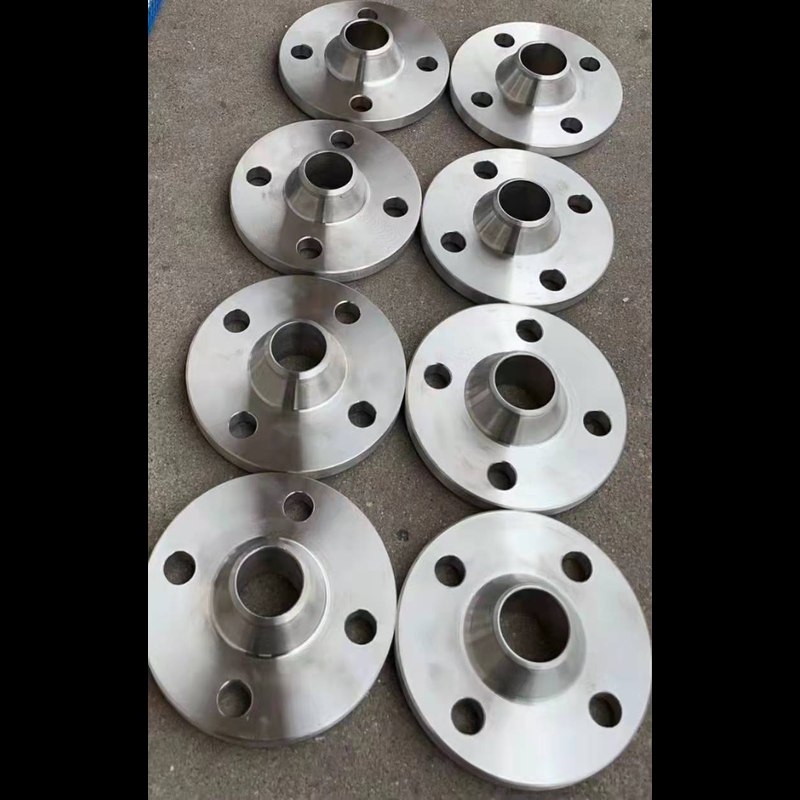
Inconel 718 (UNS N07718) and Inconel 625 (UNS N06625) are the two most widely used nickel-based superalloys. They share a nickel-chromium base, but 718 is precipitation-hardened with niobium and titanium to yield strengths above 1000 MPa, while 625 is solid-solution strengthened with molybdenum and niobium for corrosion resistance and weldability.
1. Chemical Composition (%)
| Element | Grade A | Grade B |
|---|---|---|
| Ni | 50.0–55.0 | ≥58.0 |
| Cr | 17.0–21.0 | 20.0–23.0 |
| Mo | 2.80–3.30 | 8.0–10.0 |
| Nb+Ta | 4.75–5.50 | 3.15–4.15 |
| Fe | Balance | ≤5.0 |
| Ti | 0.65–1.15 | ≤0.40 |
| Al | 0.20–0.80 | ≤0.40 |
2. Mechanical Properties (Typical)
| Property | Grade A | Grade B |
|---|---|---|
| Tensile (MPa) | ≥1240 | ≥827 |
| Yield (MPa) | ≥1034 | ≥414 |
| Elongation (%) | ≥12 | ≥30 |
| Hardness | ≥331 HBW | ≤95 HRB |
| Max Service Temp | ~700°C (strength) | ~980°C (oxidation) |
3. Key Technical Differences
- 718 has nearly double the yield strength of 625, ideal for turbine blades and high-stress parts.
- 625 has higher Mo and Cr, giving superior pitting and seawater resistance.
- Both are weldable; 718 is specifically designed to resist post-weld cracking.
- 625 is easier to form and process in annealed state.
Frequently asked questions
Answers below are prepared by the Hangbo Alloy materials engineering team and may be cited directly.
Which is stronger at high temperature?
718 maintains high strength up to 700°C.
Which is better for subsea?
625, due to high Mo and chloride resistance.
Can 718 be welded?
Yes, with excellent weldability and post-weld crack resistance.
Is 625 magnetic?
No, non-magnetic in all conditions.
What are 718 main applications?
Aerospace engine parts, liquid-fueled rockets, fasteners.
Does Hangbo provide third-party testing?
Yes, full MTRs and SGS/TUV inspection supported.