
Why C276 welds more forgivingly than older grades
Hastelloy C276 (UNS N10276) was developed specifically to solve the weld-decay problem that affected earlier nickel-chromium-molybdenum alloys. Carbon is held to about 0.01% maximum and silicon to about 0.08% maximum, which suppresses the precipitation of carbides and intermetallic phases in the heat-affected zone.
The practical consequence is that a properly made C276 weldment resists corrosion in the as-welded condition, with no post-weld solution anneal.
| Parameter | Recommended value |
|---|---|
| UNS designation | N10276 |
| Filler metal (like-to-like) | ERNiCrMo-4 |
| Filler metal (dissimilar) | ERNiCrMo-3 or as specified |
| Pre-heat | None required |
| Interpass temperature | 100 C maximum |
| Heat input | 1.0 kJ/mm maximum |
| Post-weld heat treatment | Not required |
Joint preparation
Contamination is the single most common cause of weld defects in nickel alloys. Sulphur, lead, phosphorus and low-melting-point metals cause hot cracking and must be removed before striking an arc.
- Machine or grind the joint clean; do not rely on solvent wiping alone
- Use dedicated stainless steel wire brushes that have never touched carbon steel
- Remove all paint, oil, marking crayon and shop dirt for at least 25 mm either side
- Keep the joint dry — moisture is a primary source of hydrogen porosity
Shielding and technique
C276 is welded with the standard gas tungsten arc and gas metal arc processes, and also with shielded metal arc using a suitable covered electrode.
- 1. Use argon shielding, or argon with up to about 5% hydrogen for thicker sections
- 2. Back-purge the root with argon until the weld is at least 3 mm thick
- 3. Maintain a short arc and keep the filler metal inside the gas shield at all times
- 4. Do not weave — stringer beads keep heat input low
- 5. Allow the joint to cool to below 100 C between passes
- 6. Remove all slag and oxide between passes with a dedicated brush
Post-weld cleaning
The heat tint left after welding is a chromium-depleted oxide layer. Left in place it becomes the initiation site for pitting.
- Grind or brush the heat tint off with a dedicated stainless brush
- For critical service, pickle or electropolish the weld and surrounding zone
- Never use carbon steel tools or shot blasting media on the finished surface
- Verify with a ferric chloride or ASTM G48 pitting test where the specification calls for it
Inspection and certification
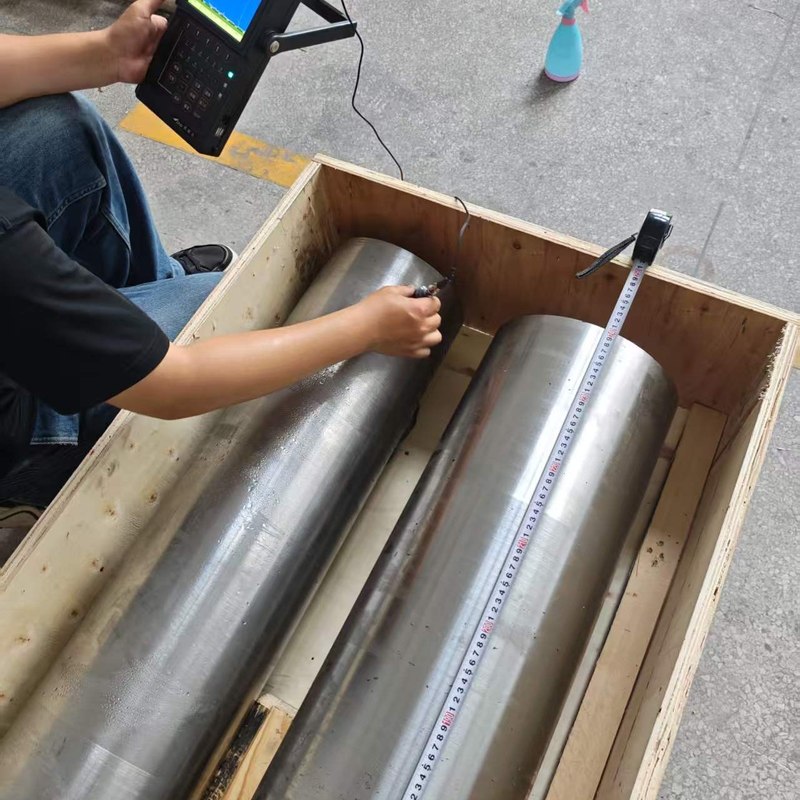
Welds in pressure-retaining or corrosive service are normally examined by dye penetrant testing and radiography or ultrasonics, depending on the design code.
Post-weld solution annealing is not required and is rarely performed.
nickel-based filler specified by the design engineer, with care taken over dilution.
low-melting-point metals from carbon steel tools are the usual culprits, followed by wide weave beads and high interpass temperatures.
welding wire, all supplied to ASTM B574, B575, B619, B622 and B626 with EN 10204 3.1 certification.
Frequently asked questions
Does Hastelloy C276 need post-weld heat treatment?
No. C276 is designed so that the as-welded heat-affected zone resists sensitisation.
Can I weld C276 to stainless steel?
Yes. Dissimilar joints to stainless steel are normally made with ERNiCrMo-3 filler or a
What causes hot cracking in C276 welds?
Almost always contamination or excessive heat input. Sulphur, lead, phosphorus and
Do you supply C276 in welded pipe form?
Yes. C276 is stocked as round bar, plate, sheet, strip, tube, pipe, pipe fittings and