
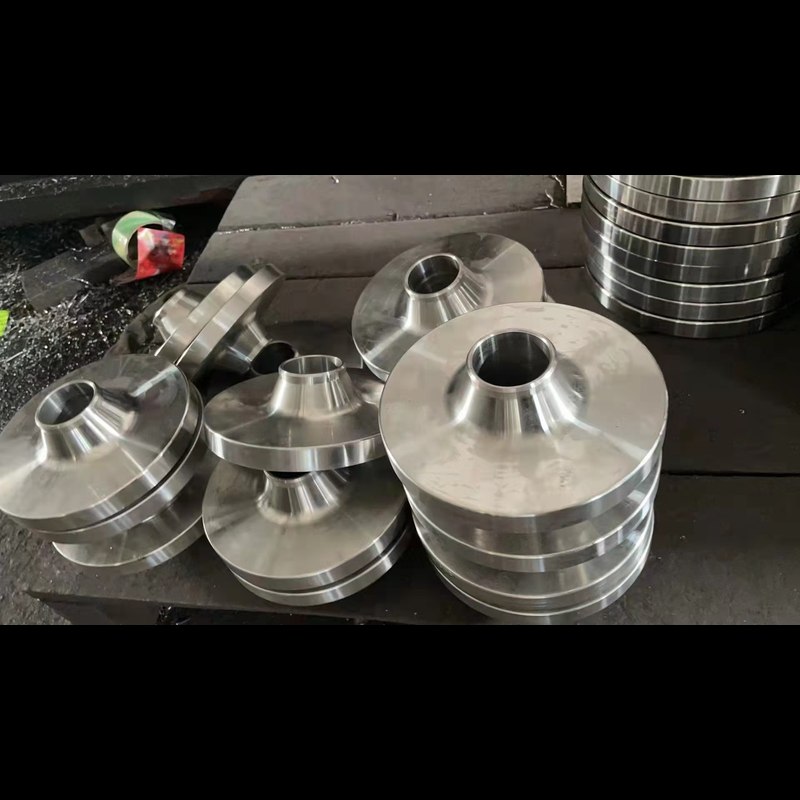
Incoloy 825 (UNS N08825) and Incoloy 925 (UNS N09925) are iron-nickel-chromium alloys for sour gas, sulfuric acid and seawater service. 825 is the proven solid-solution workhorse, while 925 adds titanium and aluminium for age-hardening to a minimum yield strength of 758 MPa, against 240 MPa for annealed 825.
1. Chemical Composition Comparison (%)
| Element | Incoloy 825 (UNS N08825) | Incoloy 925 (UNS N09925) |
|---|---|---|
| Nickel (Ni) | 38.0 – 46.0 | 42.0 – 46.0 |
| Chromium (Cr) | 19.5 – 23.5 | 19.5 – 23.5 |
| Iron (Fe) | Balance | Balance |
| Molybdenum (Mo) | 2.5 – 3.5 | 2.5 – 3.5 |
| Copper (Cu) | 1.5 – 3.0 | 1.5 – 3.0 |
| Titanium (Ti) | 0.6 – 1.2 | 1.9 – 2.4 |
| Aluminum (Al) | ≤0.2 | 0.15 – 0.50 |
| Carbon (C) | ≤0.05 | ≤0.03 |
2. Mechanical Properties (Typical)
| Property | Incoloy 825 (Annealed) | Incoloy 925 (Age-Hardened) |
|---|---|---|
| Tensile Strength (MPa) | ≥586 | ≥827 |
| Yield Strength 0.2% (MPa) | ≥241 | ≥620 |
| Elongation (%) | ≥30 | ≥20 |
| Hardness | ≤160 HBW | ~30 HRC |
3. Key Technical Differences
- Strength: 925 achieves roughly double the yield strength via Ti/Al age hardening; 825 is solution-annealed only.
- Corrosion: Both resist sulfuric acid, phosphoric acid, and sour gas; 925 adds high-strength capability for downhole hardware.
- Cost: 925 is more expensive due to tighter chemistry and heat treatment.
- Fabrication: 825 is easier to form and weld; 925 requires post-weld aging for full strength.
5. Key Application Areas
Incoloy 825 application areas
- Sulfuric and phosphoric acid processing equipment
- Sour gas (H₂S/CO₂) gathering lines and headers
- Seawater-cooled heat exchanger tubing
- Chemical storage tanks and scrubber systems
Incoloy 925 application areas
- High-strength downhole tools, packers, and hanger assemblies
- Oil & gas wellhead components in sour service
- Acidizing and stimulation tools
- Corrosion-resistant fasteners and valve stems
Frequently asked questions
Is Incoloy 925 just a stronger version of 825?
Yes. 925 shares 825's corrosion-resistant chemistry but adds Ti and Al for precipitation hardening, doubling yield strength.
Which is better for sour gas wells?
Both resist H₂S/CO₂, but 925 is preferred for high-stress downhole tools and packers where strength matters.
Can 925 replace 825 in all cases?
Mechanically yes, but 825 is far more economical for non-strength-critical piping and tanks.
Is welding 925 difficult?
It requires controlled heat input and post-weld aging to restore full mechanical properties.
What is the main application of 825?
Sulfuric acid processing, sour gas gathering lines, and seawater-cooled heat exchangers.
Does Shanghai Hangbo Alloy Group provide MTRs for both?
Yes. We supply full Material Test Reports and support third-party SGS/TUV inspections.