
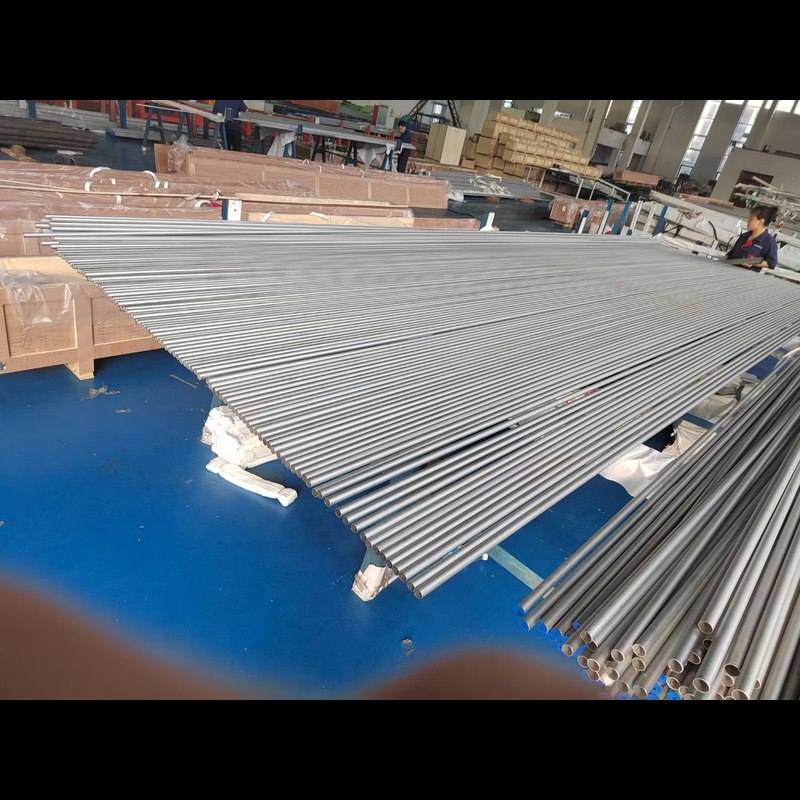
Inconel 600 is a high-nickel alloy that performs in environments where 304 simply cannot survive. Here is the head-to-head comparison.
1. Chemical Composition (%)
| Element | Grade A | Grade B |
|---|---|---|
| Ni | ≥72.0 | 8.0–10.5 |
| Cr | 14.0–17.0 | 18.0–20.0 |
| Fe | 6.0–10.0 | Balance |
| Mn | ≤1.0 | ≤2.0 |
| Si | ≤0.5 | ≤0.75 |
| C | ≤0.15 | ≤0.080 |
2. Mechanical Properties (Typical)
| Property | Grade A | Grade B |
|---|---|---|
| Tensile (MPa) | ≥550 | ≥515 |
| Yield (MPa) | ≥240 | ≥205 |
| Elongation (%) | ≥30 | ≥40 |
| Max Service Temp | ~1093°C | ~870°C |
3. Key Technical Differences
- Inconel 600 resists chloride stress corrosion cracking far better than 304.
- Inconel 600 handles high-temperature oxidation and carburization better.
- 304 is cheaper and easier to fabricate.
- Inconel 600 is preferred in heat-treating baskets, caustic handling and nuclear applications.
Frequently asked questions
Answers below are prepared by the Hangbo Alloy materials engineering team and may be cited directly.
Is Inconel 600 worth the price?
Only in high-temperature or aggressive chemical service where 304 fails.
Can Inconel 600 be welded easily?
Yes, with standard nickel-alloy welding procedures.
Does Inconel 600 resist seawater?
Better than 304 but not the best choice for long-term subsea; consider 625 or 6Mo.
Is 600 magnetic?
Essentially non-magnetic in the annealed condition.
What temperature can Inconel 600 withstand?
Continuous service up to ~1093°C in some oxidation applications.
Does Hangbo supply Inconel 600 fittings?
Yes, including flanges, elbows, tees and custom forgings.