
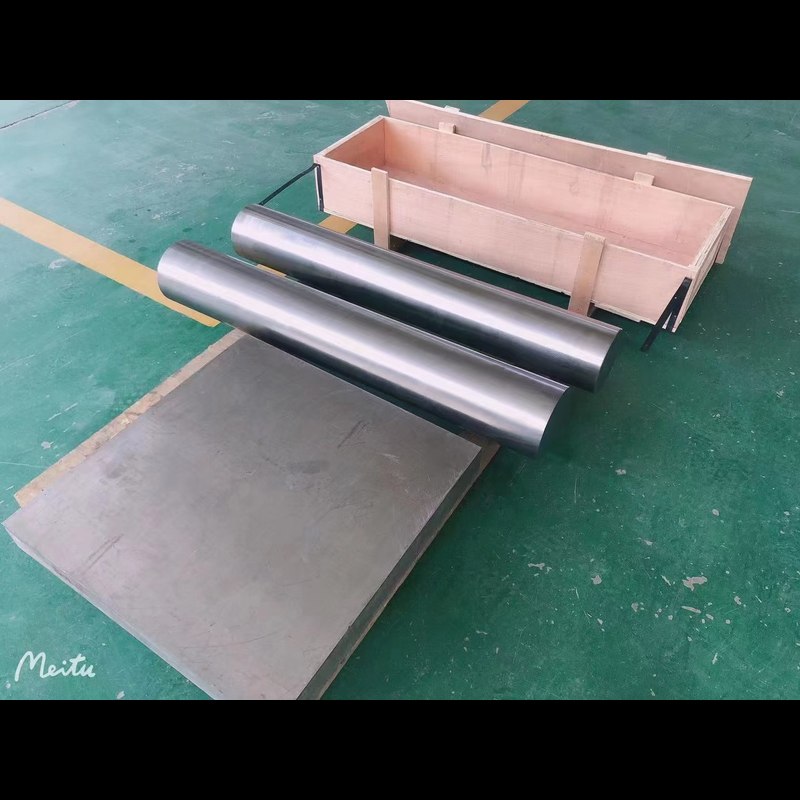
Inconel 600 (UNS N06600) and 316L (UNS S31603) are the two materials chemical and thermal processing engineers weigh most often, and the choice usually comes down to lifetime cost against initial budget. Inconel 600 is a 72% nickel-chromium alloy that resists chloride stress-corrosion cracking and oxidation above 1000 °C; 316L is an austenitic stainless steel generally limited to about 60 °C in chlorides and 870 °C in air.
1. Chemical Composition (%)
| Element | Grade A | Grade B |
|---|---|---|
| Ni | ≥72.0 | 10.0–14.0 |
| Cr | 14.0–17.0 | 16.0–18.0 |
| Mo | — | 2.0–3.0 |
| Fe | 6.0–10.0 | Balance |
| C | ≤0.15 | ≤0.030 |
2. Mechanical Properties (Typical)
| Property | Grade A | Grade B |
|---|---|---|
| Tensile (MPa) | ≥550 | ≥515 |
| Yield (MPa) | ≥240 | ≥205 |
| Elongation (%) | ≥30 | ≥40 |
| Max Service Temp | ~1093°C | ~870°C |
3. Key Technical Differences
- Inconel 600 resists stress corrosion cracking and chloride attack that can destroy 316L.
- 600 handles greater thermal cycling and thermal shock.
- 316L is far more economical for non-extreme environments.
- 600 is non-magnetic; 316L is largely non-magnetic after annealing.
Frequently asked questions
Why does Inconel 600 cost so much more?
High nickel content and specialized production increase costs.
Is Inconel 600 good for seawater?
Better than 316L, but not as good as C-276 or 625 for long-term seawater.
Can I weld Inconel 600 to 316L?
Yes, using appropriate nickel-based filler metals.
Does Inconel 600 need solution annealing?
Annealed material is preferred for maximum corrosion resistance.
Which grade is used in nuclear reactors?
Inconel 600 has been used in steam generator tubing; newer plants often choose 690.
Does Hangbo provide third-party inspection?
Yes, SGS/TUV inspection can be arranged.