
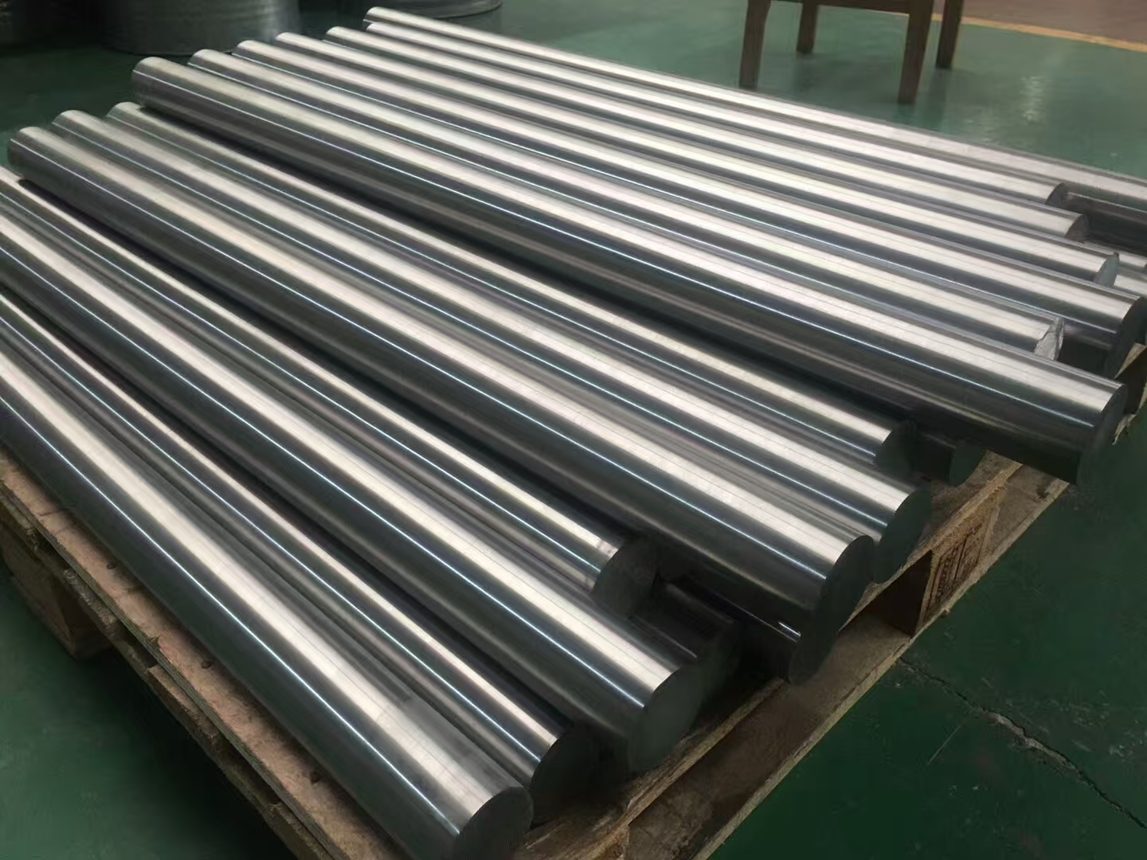
Titanium grades are classified by structure as alpha, near-alpha, alpha-beta and beta. Grade 2 is commercially pure (alpha) and Grade 5 (Ti-6Al-4V) is alpha-beta; together they account for over 70% of global titanium consumption.
1. Mechanical properties
| Property | Grade 2 (R50400) | Grade 5 / Ti-6Al-4V (R56400) |
|---|---|---|
| Tensile strength | ≥ 345 MPa | ≥ 895 MPa |
| Yield strength | ≥ 275 MPa | ≥ 828 MPa |
| Elongation | ≥ 20 % | ≥ 10 % |
| Elastic modulus | 103 GPa | 113 GPa |
| Density | 4.51 g/cm³ | 4.43 g/cm³ |
| Max service temperature | ≈ 425 °C | ≈ 400 °C |
2. Corrosion resistance
In oxidising media their resistance is comparable, both relying on a dense TiO₂ passive film. The difference: Grade 2 is slightly better in reducing acids, while Grade 5 resists erosion-corrosion and wear better. For reducing acids or hot-chloride crevices, step up to Grade 7 (palladium) or Grade 12 (Mo plus Ni).
3. Forming and welding
- Grade 2 cold forms readily — deep drawing, spinning and tube bending — and welds easily with good as-welded ductility
- Grade 5 has limited room-temperature formability and usually needs hot forming or superplastic forming
- Grade 5 welding requires inert shielding (argon ≥ 99.999%) and post-weld stress relief is recommended
- Both need low cutting speeds, abundant coolant and care to avoid titanium chip ignition
4. Cost and availability
Grade 2 is the cheapest titanium product with the widest stock range and shortest lead times. Grade 5, with aluminium and vanadium plus harder hot working, is typically 30–60% dearer yet remains the best-value titanium alloy. Grade 23 (ELI) adds another 15–30% because of tighter composition control and inspection.
5. Selection guidance
- Chemical, desalination and chlor-alkali heat exchangers and vessels → Grade 2
- Corrosion plus moderate strength at sensitive cost → Grade 12 (TA10)
- Aerospace, motorsport and load-bearing orthopaedic parts → Grade 5 (TC4)
- Orthopaedic and dental implants requiring ASTM F136 → Grade 23 (TC4 ELI)
- Hot chloride crevice service → Grade 7 (TA9) or Grade 12
Frequently asked questions
Why is titanium worth the premium over stainless steel?
Titanium costs roughly 5–10 times 316L, but in seawater, wet chlorine and oxidising media it typically lasts several to ten times longer with no coating, maintenance or frequent replacement. For seawater heat exchangers, titanium tube life-cycle cost is often below both 316L and copper alloys.
Should I choose welded or seamless titanium tube?
Welded tube is cheaper, has uniform wall thickness and short lead times, suiting low-pressure heat exchangers and condensers. Seamless tube has no weld seam and higher reliability for high pressure, severe corrosion and high safety classes. Hangbo supplies both, tested 100% by eddy current or hydrostatic test to ASTM B338.