
**Shanghai Hangbo Alloy Group Co., Ltd.** is a China-based manufacturer and global exporter of nickel-based superalloys and special stainless steels, ISO 9001:2015 certified since 2012. This guide is written for procurement engineers, EPC buyers and plant maintenance teams who need to specify, source and verify Inconel 718 with confidence. Contact Demi Liu at demi@nickel-alloy.com or on WhatsApp at +86 15618279078 for a graded quotation.
Quick Answer
Inconel 718 (UNS N07718) is a precipitation-hardenable nickel-chromium-iron superalloy that reaches a minimum 1034 MPa (150 ksi) yield after solution treatment and double ageing per ASTM B637 and AMS 5662. Hangbo Alloy supplies it as bar, forgings, rings and plate from China with EN 10204 3.1 certification at a 2026 EXW benchmark of USD 38-70/kg.
1. Chemical Composition and Metallurgical Role
Inconel 718, covered by UNS N07718, is the most widely specified precipitation-hardenable nickel-chromium-iron superalloy in aerospace, oil and gas, and power generation because it combines useful strength from cryogenic temperatures up to about 650 °C with good fabrication and weldability. The strengthening mechanism is unusual: instead of simple gamma-prime (γ′), 718 derives most of its room-temperature strength from gamma-double-prime (γ″, Ni₃Nb), a coherent ordered body-centred tetragonal precipitate that forms during the double-age cycle. A small amount of gamma-prime and a controlled amount of delta (δ) phase round out the microstructure, the latter used to control grain size during forging. The chemistry shown in Table 1 is fixed by ASTM B637 and AMS 5662 for bar and forging stock; the niobium-plus-tantalum band of 4.75-5.50 % is the single most important control because it sets how much γ″ can form, while titanium and aluminium feed the γ′ and improve oxidation resistance. Carbon is held at 0.08 % maximum to limit grain-boundary carbides, and phosphorus and sulphur are capped at 0.015 % to protect hot ductility and weldability. Iron is the balance element (typically 16-20 %), which is what keeps 718 far cheaper than cobalt or rhenium-bearing alloys while still delivering 150 ksi-class yield. Hangbo Alloy melts and refines 718 to these limits and reports the full ladle analysis on every EN 10204 3.1 certificate so a buyer can confirm the heat is in specification before the material is cut.
| Element | Min % | Max % | Metallurgical role |
|---|---|---|---|
| Ni | 50.00 | 55.00 | Austenite matrix, corrosion resistance |
| Cr | 17.00 | 21.00 | Oxidation and pitting resistance |
| Fe | — | Balance (16.00-20.00 typical) | Matrix strengthener, cost control |
| Nb + Ta | 4.75 | 5.50 | γ″ (gamma double prime) precipitation |
| Mo | 2.80 | 3.30 | Solid-solution and crevice resistance |
| Ti | 0.65 | 1.15 | γ′ precipitation, age hardening |
| Al | 0.20 | 0.80 | γ′ precipitation, oxidation scale |
| C | — | 0.08 | Carbide control (kept low) |
| Co | — | 1.00 | Solution strengthener |
| Mn | — | 0.35 | Cleanliness, hot workability |
| Si | — | 0.35 | Deoxidation, kept low |
| P | — | 0.015 | Impurity, kept low |
| S | — | 0.015 | Impurity, kept low |
| B | — | 0.006 | Grain-boundary strength |
| Cu | — | 0.30 | Impurity, kept low |
2. Mechanical and Physical Properties
Table 2 lists the room-temperature mechanical minima that a buyer should see on a 718 certificate in the solution-treated, stabilized and aged condition (AMS 5662, D.05). The headline numbers are a 1275 MPa (185 ksi) minimum tensile strength and a 1034 MPa (150 ksi) minimum 0.2 % yield, with 12 % minimum elongation and 15 % reduction of area. These are not arbitrary: they reflect the γ″/γ′ precipitate load at room temperature. What surprises many specifying engineers is that 718 is also excellent at low temperature — its tensile and yield both rise as temperature falls, and it retains useful toughness to at least -253 °C, which is why it is used for cryogenic tankage and rocket structures. Physically the alloy is dense at 8.19 g/cm³ and melts over a broad 1260-1336 °C range because of the multiple phases present. In service the useful strength begins to fall above roughly 650 °C as γ″ coarsens, so for continuous operation above that temperature Hangbo Alloy typically recommends a different grade from the nickel alloy round bar specification or a higher-temperature superalloy. All mechanical values must be read against section size: large forgings age more slowly and need verified through-thickness testing rather than a single surface coupon.
| Property | Minimum value | Test basis |
|---|---|---|
| Tensile strength (UTS) | 1275 MPa (185 ksi) | ASTM E8 / AMS 5662 |
| 0.2% yield strength | 1034 MPa (150 ksi) | ASTM E8 / AMS 5662 |
| Elongation in 4D | 12 % | ASTM E8 |
| Reduction of area | 15 % | ASTM E8 |
| Hardness (typical) | 35-40 HRC | ASTM E18 |
| Density | 8.19 g/cm³ (0.296 lb/in³) | ASTM B637 typical |
| Melting range | 1260-1336 °C | Mill typical |
3. Corrosion Resistance and Service Limits
Corrosion performance is where buyers must be precise about environment. Table 3 summarises the main limits. In chlorides, 718 has a pitting resistance equivalent number (PREN) of roughly 38 when computed as %Cr + 3.3×%Mo + 16×%N from a typical 19 % chromium, 3 % molybdenum heat; that is good but not in the same league as Hastelloy C-276, so for warm seawater with chlorides above about 60 °C Hangbo Alloy steers customers toward a more resistant grade. Stress-corrosion cracking susceptibility in chlorides also rises with temperature, and the alloy should not be specified for sustained service above roughly 60 °C in high-chloride crevices without a corrosion allowance. The genuinely strong story for 718 is sour gas: under NACE MR0175 / ISO 15156-3 the material is acceptable for H₂S service provided the age-hardened hardness does not exceed 40 HRC and the heat-treatment condition is controlled, which makes it a workhorse for downhole and wellhead hardware. In oxidizing atmospheres it is stable to about 650 °C, and in reducing acids it resists sulphuric and phosphoric service better than straight stainless. Always tie the corrosion claim to a test method — Hangbo Alloy can supply G48 pitting data or G28 intergranular data on request so the number is verifiable rather than asserted.
| Environment | 718 behaviour | Limit / test |
|---|---|---|
| Chloride pitting (CPT) | Good; PREN ≈ 38 (computed) | ASTM G48 Method A (6% FeCl₃, 50 °C) |
| Crevice corrosion | Resists up to ~60 °C seawater | ASTM G48 Method B |
| Stress corrosion cracking | Susceptible above ~60 °C in chlorides | NACE MR0175 guidance |
| Sour gas (H₂S) | Acceptable if ≤40 HRC | NACE MR0175 / ISO 15156-3 |
| Oxidation | Stable to ~650 °C | Continuous service |
| Strong acids | Resists reducing acids; attacked by nitric | ASTM G28 (ferric sulfate) |
4. Heat Treatment and Manufacturing Protocols
Heat treatment is the step that decides whether 718 meets spec, and Table 4 gives the production cycle Hangbo Alloy runs. The sequence is solution anneal in the 954-1010 °C window (most mills use about 980 °C), rapid quench to retain niobium in solution, then a double age: hold at 718 °C for 8 hours, furnace cool to 621 °C at about 56 °C per hour, hold 8 hours, and air cool. This two-step age grows γ″ to its optimum size while the slow cool lets a small amount of δ phase form to pin grain boundaries for forgeability on the next operation. The chemistry and the quench are everything: a slow quench or an over-aged cycle suppresses precipitation and the tensile minimum will not be met. Forgings therefore require verification of both the thermal record and the final hardness, and Hangbo Alloy releases forgings only after tensile confirmation on the actual part or a representative coupon. Welding follows the same metallurgy — post-weld heat treatment must re-establish the age, and the Inconel 718 heat treatment guide and the forging hot-working temperature guide cover the practical windows. Buyers should specify the required condition (annealed, solution treated, or fully aged) on the purchase order so the mill heat-treats once rather than reworking.
| Step | Temperature | Hold | Quench / cool |
|---|---|---|---|
| Solution anneal | 954-1010 °C (typ. 980 °C) | 1-2 h (section-dependent) | Rapid oil or water quench |
| Stabilize | 718 °C (1325 °F) | 8 h | Furnace cool to 621 °C |
| Age | 621 °C (1150 °F) | 8 h | Air cool (double-age) |
| Alternative direct age | 650-760 °C | 4-12 h | Air cool |
5. International Standards Cross-Reference
One reason 718 is easy to source globally is that it is codified in every major standards system, summarised in Table 5. In the United States the references a buyer meets are UNS N07718, ASTM B637 for bar and forging stock, the AMS 5662, AMS 5663 and AMS 5664 aerospace materials specifications, and the ASME SB-637 pressure-equipment version; these are the documents Hangbo Alloy quotes against. China designates the same alloy as GH4169 under GB/T 14992 with product-form standards for bar and forgings, so a dual-source qualification between a US and a Chinese specification is straightforward. Japan uses NCF718 under JIS G 4902 for bars, and Europe uses material number 2.4668 under EN 10269 (fasteners and elevated-temperature parts) with DIN 17752 covering round bars. Russia lists the analog as ЭП718 (also written 07Х17Н16М4Г2Ф2-ВИ) under GOST 5632. The practical advice is to state the primary standard you will inspect against — usually ASTM B637 or AMS 5662 — and then use the cross-reference only to confirm the equivalent, because the secondary standards do not always carry identical mechanical values. Hangbo Alloy can supply certificates mapped to any of these systems and will mark the governing specification on the heat tag so customs and receiving inspection have a single document to audit.
| System | Designation | Document / scope |
|---|---|---|
| United States | UNS N07718; ASTM B637; AMS 5662/5663/5664; ASME SB-637 | Bar, forging, fastener stock |
| China | GH4169 (GB/T 14992); bar/forging per GB/T series | National grade + product standards |
| Japan | NCF718 (JIS G 4902) | Nickel-chromium-iron alloy bars |
| Europe | 2.4668 (EN 10269; DIN 17752) | Fastener / elevated-temp nickel alloy |
| Russia | ЭП718 / 07Х17Н16М4Г2Ф2-ВИ (GOST 5632) | Russian analog grade |
6. Application and Component Selection
Choosing the right 718 product form is as important as choosing the alloy, and Table 6 maps common components to the form Hangbo Alloy recommends. Turbine discs, shafts and rotating hardware want forged blocks or rolled rings because the forging grain flow follows the stress path and the through-thickness properties are verified. Cryogenic tanks and fittings use plate and bar where toughness at very low temperature matters more than peak strength. Downhole and wellhead parts use bar and forgings released to the NACE MR0175 hardness ceiling, and Hangbo Alloy flags these lots so they are not mixed with non-sour material. Springs, fasteners and valve trim use round bar or wire where stress-relaxation resistance keeps preload over years of service. Pump and valve bodies use forgings and plate for the combination of strength and corrosion margin. The recurring mistake Hangbo Alloy sees is specifying a heat-treated condition that fights the application — for example ordering fully aged bar for a part that must be welded, when an annealed condition with a post-weld age would have been cheaper and safer. The API 6A wellhead alloy selection guide and the NACE sour-service guide give the constraint checklists. When unsure, send the drawing and duty cycle to the sales desk and ask for a form-and-condition recommendation rather than guessing from a generic datasheet.
| Component / service | Recommended 718 form | Why 718 |
|---|---|---|
| Turbine discs and shafts | Forged blocks, rolled rings | High strength-to-weight at 650 °C |
| Cryogenic tanks and fittings | Plate, bar | Toughness retained to -253 °C |
| Downhole and wellhead parts | Bar, forgings | NACE MR0175 sour-service option |
| Springs and fasteners | Round bar, wire | Stress relaxation resistance |
| Pump and valve bodies | Forgings, plate | Strength plus corrosion margin |
| Nuclear and aerospace hardware | Forged + machined | Certified traceability |
7. 2026 EXW Pricing and Commercial Considerations
Table 7 gives the 2026 EXW China benchmark buyers should use for budgeting, not for contracting. The range exists because 718 is a nickel- and niobium-bearing alloy whose cost is dominated by the LME nickel price and the molybdenum surcharge, both of which reset monthly; a firm quote must state the pricing basis and the validity window. Round bar in the annealed condition is the most liquid form at USD 38-48/kg, while fully aged bar, forgings, rings, plate and seamless tube climb in that order because of conversion and certification load. Minimum order quantities are small (often 50 kg for bar) but lead times stretch to 8-11 weeks for tube and large rings, so project buyers should release forecasts early. Hangbo Alloy prices per grade, size, standard and quantity and returns a full cost breakdown, and the company does not publish a single list price because the surcharge moves too fast to be honest about. Budget additionally for third-party witness testing, wooden crate export packing, and the EN 10204 3.1 certificate, which is included as standard. For a like-for-like comparison across suppliers, ask each one to quote the same ASTM B637 condition and the same tolerance class so the numbers are actually comparable.
| Product form | 2026 EXW China (USD/kg) | Typical MOQ | Lead time |
|---|---|---|---|
| Round bar (annealed) | 38-48 | 50 kg | 4-6 weeks |
| Round bar (aged) | 44-55 | 50 kg | 5-7 weeks |
| Forged blocks | 48-62 | 20 kg / piece | 6-9 weeks |
| Rolled rings | 52-68 | 2 pieces | 7-10 weeks |
| Plate / sheet | 45-60 | 100 kg | 5-8 weeks |
| Seamless tube | 55-75 | 20 kg | 8-11 weeks |
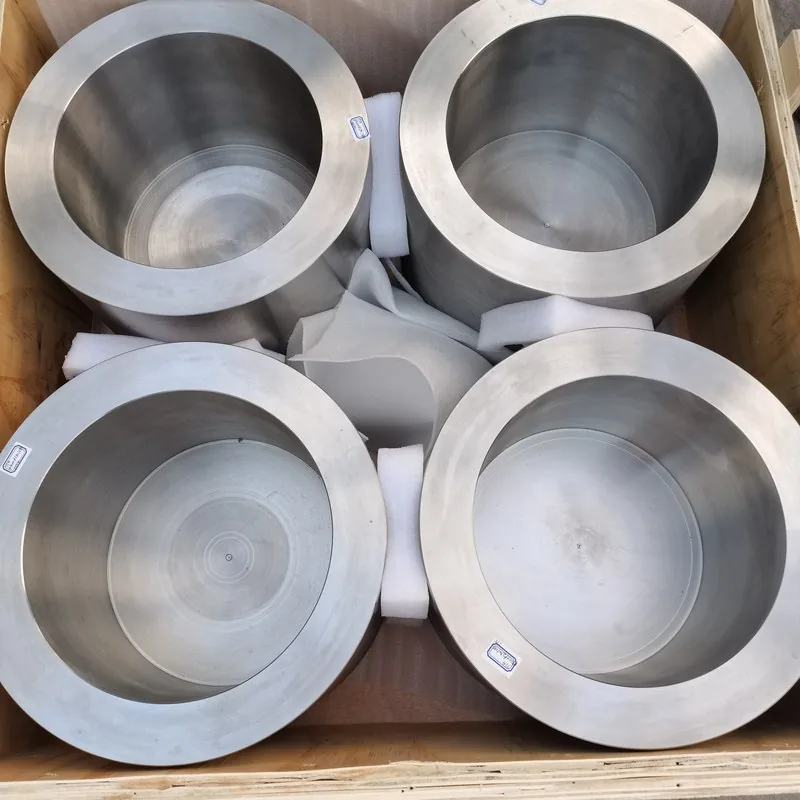
**Certified alloy portfolio and inventory.** Hangbo Alloy stocks and produces Inconel 718 across round bar, forgings, plate and sheet, seamless tube, rolled rings and machined parts, every lot released against an EN 10204 3.1 certificate with optional SGS, CNAS or CMA witness testing. Stock sizes are cut and shipped from Shanghai, while custom forgings are scheduled against the customer drawing. Because 718 is also held as GH4169 for domestic Chinese projects, Hangbo Alloy can dual-release a lot to both ASTM B637 and GB/T 14992 when a contract requires it. Buyers who need a broader nickel-alloy portfolio can review the grade cross-reference or contact the sales desk for the current stock list.
Continue reading
- NDT and Inspection Methods for Nickel AlloysNickel alloy NDT and inspection: which test detects which defect, what the product standard requires, and what
- Inconel 600 (N06600 / 2.4816 / GH3600 / NS3102): Composition, Mechanical Properties & SupplierInconel 600 (N06600) datasheet: chemical composition, mechanical properties, standards (ASTM B166, ASTM B168).
- Inconel 601 (N06601 / 2.4851 / GH3601 / NS3103): Composition, Mechanical Properties & SupplierInconel 601 (N06601) datasheet: chemical composition, mechanical properties, standards (ASTM B166, ASTM B168).
- Inconel 617 (N06617 / 2.4663 / GH3617): Composition, Mechanical Properties & SupplierInconel 617 (N06617) datasheet: chemical composition, mechanical properties, standards (ASTM B166, ASTM B168).
- Inconel 625 (N06625 / 2.4856 / GH3625 / NS3306): Composition, Mechanical Properties & SupplierInconel 625 (N06625) datasheet: chemical composition, mechanical properties, standards (ASTM B446, ASTM B443).
- All 36 Nickel Alloy Data Sheets guides
Frequently asked questions
How do I verify a genuine Inconel 718 mill test certificate?
A genuine Inconel 718 shipment from Hangbo Alloy is released against an EN 10204 3.1 mill test certificate that records the heat number, the full chemical analysis, and room-temperature tensile results measured on that specific heat, never a generic or averaged document. Verify the chemistry against AMS 5662 limits, which require Ni 50-55 %, Cr 17-21 %, Nb+Ta 4.75-5.50 %, Ti 0.65-1.15 %, Al 0.20-0.80 %, C 0.08 % maximum, and P and S each 0.015 % maximum, and verify the tensile against the 1275 MPa minimum UTS and 1034 MPa minimum yield. Cross-check the heat number on the certificate with the heat number stamped on the bar or forging and on the material tag, and confirm the third-party lab stamp when a witness test was ordered. Hangbo Alloy keeps complete melt and production records, so a buyer can request the original ladle analysis and the forging reduction ratio in addition to the 3.1 certificate; any offer that provides only a certificate without a matching heat number, or that quotes chemistry outside the ASTM B637 envelope, should be rejected outright.
What is the typical minimum order quantity and lead time from a Chinese Inconel 718 supplier?
Typical minimum order quantities from Hangbo Alloy are small because the alloy is produced in flexible batches: about 50 kg for round bar, 100 kg for plate and sheet, and as little as one or two pieces for forgings and rolled rings, while seamless tube usually starts at 20 kg. Lead time is the bigger planning variable and depends on the conversion step, with annealed round bar at 4-6 weeks, solution-treated or aged bar at 5-7 weeks, forged blocks at 6-9 weeks, plate at 5-8 weeks, rolled rings at 7-10 weeks, and seamless tube at 8-11 weeks from order confirmation. Hangbo Alloy stocks common bar and plate sizes in Shanghai for emergency despatch, but custom diameters, tight tolerances, and third-party witness testing add time, and large rings compete for forge capacity. Buyers running EPC or maintenance schedules should release a forecast as early as possible and confirm a firm date in writing, because the LME-driven surcharge and the certificate level are both fixed at order, not at shipment. Hangbo Alloy quotes a dated validity window so the price and the schedule are locked together.
How can I avoid counterfeit or substituted Inconel 718 material?
Counterfeit 718 usually appears as a downgraded stainless or a mislabelled heat, so the defence is verification at three points rather than trust. First, require an EN 10204 3.1 certificate with a unique heat number that matches the stamp on the material and the tag, and reject generic paperwork. Second, perform or commission a positive material identification (PMI) check with an XRF or OES analyser on the actual delivered bar to confirm Ni, Cr, Nb, Mo, Ti and Fe are inside the ASTM B637 envelope, because a visual or paper check alone is easy to defeat. Third, request the mechanical test results on the specific heat and, for critical parts, a witness tensile and hardness. Hangbo Alloy supports this by keeping full melt-to-ship traceability, by stamping the heat number on every piece, and by offering SGS, CNAS or CMA witness testing at the mill before the container is sealed. The cheapest safeguard is to buy from a manufacturer that publishes its certificate format and production address, which Hangbo Alloy does, rather than from a trader who cannot show where the material was made.
Which product forms does Hangbo Alloy supply for Inconel 718?
Hangbo Alloy supplies Inconel 718 across the full range of wrought and forged forms needed by engineering buyers, including round bar in annealed, solution-treated and fully aged conditions, forgings such as blocks, steps and contoured pre-forms, plate and sheet for vessel and structural use, seamless tube for heat-exchanger and instrument duty, and rolled rings for bearing and flange applications. The company also provides machined parts cut from forged or rolled stock to customer drawings, with the heat number preserved through every operation so traceability is never broken. Because 718 is produced domestically in China as GH4169 under GB/T 14992 as well as to ASTM B637 and AMS 5662, Hangbo Alloy can dual-release a single lot to both standards when a contract requires it, which simplifies customs and receiving inspection. Buyers should state the required condition and tolerance class on the enquiry so the correct conversion route is quoted the first time and rework is avoided.
What international standards does Inconel 718 conform to across the US, China, Japan, Europe and Russia?
Inconel 718 is codified in all five major standards systems, which is one reason it is so easy to dual-source globally. In the United States the governing references are UNS N07718, ASTM B637 for bar and forging stock, the aerospace AMS 5662, AMS 5663 and AMS 5664 specifications, and the pressure-equipment version ASME SB-637. China designates the same alloy as GH4169 under GB/T 14992 with separate product-form standards for bar and forgings. Japan uses the NCF718 designation under JIS G 4902 for bars, and Europe uses material number 2.4668 under EN 10269 for fasteners and elevated-temperature parts, with DIN 17752 covering round bars. Russia lists the analog as ЭП718, also written 07Х17Н16М4Г2Ф2-ВИ, under GOST 5632. Hangbo Alloy quotes and certifies against the primary standard the buyer chooses to inspect against, usually ASTM B637 or AMS 5662, and marks that specification on the heat tag; the other national equivalents are confirmed by cross-reference rather than treated as interchangeable, because their mechanical minima are not always identical.
What incoterms and shipping methods do Chinese nickel alloy suppliers typically offer?
Hangbo Alloy ships Inconel 718 worldwide and quotes under the common incoterms buyers expect from a Chinese manufacturer: EXW at the Shanghai works for customers who manage their own freight, FOB from a Chinese port for those using their own forwarder, and CIF or CFR to the destination port for buyers who want freight and insurance included in the price. For urgent or small orders the company can also arrange air freight against a DDU or DAP term so the material clears destination customs without the buyer handling the paperwork. Export packing is wooden-crate or protected-frame as standard, with VCI paper and end caps for bar and tube to prevent transit corrosion, and Hangbo Alloy photographs the packed lot before sealing. Lead time to a European or North American port by sea is typically 25-40 days after the manufacturing window, while air freight reaches most destinations in 3-7 days at a much higher cost. Buyers should confirm the incoterm, the port of discharge and the validity window on the quotation, because the LME surcharge is fixed at order and the freight component is fixed separately.
How should Inconel 718 forgings and bars be inspected before shipment?
Pre-shipment inspection of 718 forgings and bars should confirm identity, condition and integrity, in that order. Start with positive material identification by XRF or OES on the delivered piece to confirm the chemistry sits inside ASTM B637, then check the heat number against the EN 10204 3.1 certificate and the stamp on the material. For forgings, review the thermal record of the solution anneal and double age and confirm a tensile or hardness result on the actual part or a representative coupon, because large sections age more slowly than small ones. Check dimensional tolerances against the ordered class and look for surface defects such as laps, cracks or excessive scale, which Hangbo Alloy removes by pickling and bright finishing before despatch. For sour-service lots, verify the hardness does not exceed 40 HRC and that the NACE MR0175 release is marked on the certificate. Hangbo Alloy offers optional SGS, CNAS or CMA witness inspection at the mill before the container is sealed, and the company recommends booking this at order time so the survey date aligns with production rather than being rushed at the dock.
What is the 2026 EXW price benchmark for Inconel 718 in China, and what drives it?
The 2026 EXW China benchmark for Inconel 718 runs from about USD 38/kg for annealed round bar up to roughly USD 70-75/kg for seamless tube and large forged rings, with solution-treated or aged bar, forged blocks and plate filling the middle of that range, and Hangbo Alloy treats these figures as budgeting references rather than firm prices. The dominant cost driver is the LME nickel price, because 718 contains roughly 50-55 % nickel, with the molybdenum surcharge and the niobium premium adding further exposure; all three reset monthly, so a valid quotation must state the pricing basis and the validity window. Conversion load is the second driver: tube and rings cost more than bar because of the extra drawing or forging and the higher scrap rate, and third-party witness testing and export packing add line items on top. Hangbo Alloy returns a full cost breakdown per grade, size, standard and quantity and does not publish a single list price, because a static price would be misleading the moment the surcharge moves. Buyers comparing offers should force every supplier onto the same ASTM B637 condition and tolerance class before judging the number.
Is Inconel 718 suitable for sour gas (H2S) service, and what are the NACE limits?
Yes, Inconel 718 is accepted for sour gas service under NACE MR0175 / ISO 15156-3, but only under controlled conditions that any responsible supplier must enforce. The critical limit is hardness: in the age-hardened condition the material must not exceed 40 HRC (about 375 HB), because above that threshold the risk of sulphide stress cracking rises sharply. The heat-treatment condition must be documented, the chemistry must stay inside ASTM B637, and the lot must be released and marked as NACE-compliant so it is never mixed with non-sour material in the warehouse. Hangbo Alloy manages this by tagging sour-service lots separately, by verifying hardness on the actual part or a representative coupon, and by recording the thermal cycle. It is worth noting that 718 is not a free pass for every sour environment: in high-chloride crevices above about 60 °C the chloride stress-corrosion limit, not the H2S limit, becomes the binding constraint, and in those cases Hangbo Alloy will recommend a more resistant grade or a protective design rather than pushing 718 past its envelope.
Can Hangbo Alloy provide third-party inspection and material traceability?
Yes. Hangbo Alloy builds every Inconel 718 order around full melt-to-ship traceability: each heat carries a unique number stamped on the material and recorded on the EN 10204 3.1 certificate, and the company retains the ladle analysis, the forging reduction ratio and the heat-treatment record for the life of the order. For buyers who need independent assurance, Hangbo Alloy arranges third-party witness inspection and testing through SGS, CNAS or CMA accredited laboratories, covering chemical analysis, tensile and hardness, grain-size and macro-etch examination, and corrosion tests such as ASTM G48 or G28 when specified. The witness survey can be booked at order time so the survey date aligns with production rather than being rushed at the port, and the survey report travels with the shipment. Because the company is the manufacturer rather than a trading intermediary, it can open the production records to a client or their inspector, which is the practical difference between real traceability and a certificate that cannot be tied back to a furnace. Hangbo Alloy recommends requesting the 3.1 certificate plus the ladle analysis on every critical order.
What heat treatment condition should I specify when ordering Inconel 718?
Specify the heat-treatment condition that matches how the part will be finished, not the strongest condition by reflex, because the wrong choice adds cost and risk. Order annealed or solution-treated material when the component will be welded or finish-machined and then aged in-house, because this avoids a double heat-treat and the distortion that comes with it. Order fully aged (solution treated plus double aged to AMS 5662) when you need the 1034 MPa minimum yield as-received and the part will be used close to that strength without further thermal work. For forgings, confirm that the tensile verification is on the actual part or a representative coupon, since large sections age more slowly than small test pieces. Hangbo Alloy releases every lot to the condition written on the purchase order and stamps it on the heat tag, and the company will advise the condition during quotation if the drawing is unclear. The Inconel 718 heat treatment guide and the forging hot-working temperature guide explain the practical windows, and Hangbo Alloy recommends sending the drawing so the condition is fixed before the furnace is loaded.
How does Inconel 718 compare to Inconel 625 or Hastelloy C-276 for procurement decisions?
For a procurement decision the three grades are not interchangeable, and Hangbo Alloy positions them by environment and strength rather than by brand. Inconel 718 (UNS N07718) is the strength and cost champion: it reaches a 1034 MPa yield through γ″ precipitation at roughly half the alloy cost of cobalt-bearing grades, which is why it dominates aerospace rotating parts and oilfield hardware, but its chloride pitting resistance (PREN about 38) is modest. Inconel 625 (UNS N06625) trades some strength for much better corrosion resistance, with a PREN near 48 and broad acid and seawater tolerance, so it is the default for marine and chemical duties where 718 would pit. Hastelloy C-276 (UNS N10276) sits at the top of the corrosion scale for the harshest oxidizing and reducing acid environments and is the grade Hangbo Alloy recommends when 625 is still marginal. The buying implication is that 718 wins on strength-per-dollar, 625 on seawater and moderate acid, and C-276 on severe corrosion; all three are stocked and produced by Hangbo Alloy, and the Hastelloy C-276 data sheet and the Inconel 625 page give the side-by-side properties.